Monday, November 28, 2016

Just watched...

...or I should say: finally watched Terrence Malick's "The New World" from 2005.


Watching a Terrence Malick film is like dreaming: images distilled down to the essence of something, whether a place or an emotional state or a person. When we dream, what we see are signifiers... because this is how we live life. The elements around us signify something if nothing other than the fact that we exist, and are alive. The fact of us. I think that is what all Malick movies can be distilled to: the messy, irrefutable, confounding fact of us.

I know much has been made of the fact that Malick is a philosophy graduate from Harvard (summa cum laude and Phi Beta Kappa) and was a Rhodes scholar at Oxford. But he left that field after a disagreement with his tutor, the philosopher Gilbert Ryle (who coined the phrase "ghost in the machine") to become a filmmaker. His films are post-philosophy in a way. What he expresses, or maybe it is more accurate to say how he expresses what he does, in itself is a new kind of philosophy, at once cerebral and visceral. A unifying common theme in Malick's films, film critic Roger Ebert said, is how "Human lives diminish beneath the overarching majesty of the world." So what I have found is that no matter what story Malick is telling, it bears his unmistakable perspective on the world which dovetails very neatly with my own, and I suspect a great number of others (in a recent conversation with a very close friend who is quite sympatico with my own psyche, I confessed that I live my daily life on the verge of tears--just look around you, at the overarching majesty of the world, at it all, and I ask you how can you not?).

So for Malick's fourth film (he is a director who is not in a rush, considering that he has been making films since 1973 and has only released eight films), we are taken into the past, to 1607 and the founding of the Jamestown settlement in Virginia. Captain John Smith (played by Colin Ferrell) is one of the men on board three ships that drop anchor in the James River. The English come ashore and set about building a fort, mistrustful of the Native Americans who were there first. But this film is far from a superficial costume spectacle or period drama. In fact, Malick and his crew worked closely with archaeologists, Jamestown historians, and Native American tribal leaders to strike the correct tone. The Native actors trained for weeks to become convincing members of the Powhatan tribe, the people who lived in that part of Virginia at that time, studying movement and voice, and choosing body paint and animal totems to express in dance. The white actors spent time training in weaponry (shooting a musket is fraught with complicated details), and fighting with swords. The fort was actually built by a crew of carpenters using logs and wood from the area in exactly the way such a structure would have been built. The Native village structures and longhouses were built using the exact techniques that were employed by Native Americans 400 years ago. The veracity went so far as using the correct strains of corn (our modern corn has been hybridized and cross-bred but Native corn was thicker, tougher, heartier, larger) and tobacco. The reality of all this helped Malick to film the way he likes: to let his actors loose to live this truth organically, to have his actors develop a relationship to a real place instead of an artificial set, to have this action happen spontaneously and unencumbered by storyboards, and for his cameraman to record it all without tracks, lights, dollies, grips, or extra crew in the way. Emmanuel Lubezki, the cinematographer working with Malick on this project, used a special lens from Panavision that allowed them to work in a widescreen format while using only natural light (a no-no in traditional filmmaking) and achieving a depth of field where everything (or almost everything) is in focus.

By the time the English attempt to make a colony, problems with disease, supply shortages, and a simple lack of information on ways to live in this land force Smith to take a trip upriver to a Native village to trade for vital food and supplies. But he is separated from his party and taken prisoner by a local tribe. Slated to be killed (possibly), the chief's daughter intervenes and manages to have his life spared. Not once in the entire film do we hear the name of this young woman, who Smith falls in love with, and who is ultimately cast out. We of course know it is Pocahontas (played with stunning innocence and skill by Q'orianka Kilcher), but as I said before, this is not a glorified period spectacle. In true Malick form, dialogue is sparse in "The New World" and often we only hear the murmurs of inner monologues of characters as we follow them, privy to the private, whispered half-thoughts in their heads and hearts. Who she is is not important. What she is doing and what is happening to and around her is.

And of course the film is ravishingly beautiful, with shots of unspoiled nature and humans simply living in the middle of it, walking and touching lightly. The fact of us. The fact of here. The fact of now. It is always now. And you are here, wherever you are. Jamestown is one story. There are more...


Recommend? Absolutely yes yes yes.

Sunday, November 27, 2016

Just watched...

..."Arrival," Denis Villeneuve's 2016 science fiction film, currently in theaters.


"Arrival" seems to represent a new kind of science fiction film. Ostensibly about the arrival of aliens to our planet, we are mercifully spared yet another film war between humans and a race of some kind of spindly, evil creatures who want to exterminate us. Instead, we are treated here to a thoughtful, meditative film--without exploding spaceships or the sight of major cities around the world being destroyed (a bizarre fetish in recent film history)--about mortality, time, communication, and naturally by extension, the nature of existence itself. A Hollywood film that feels like an art film.

Amy Adams is Dr. Louise Banks, a highly regarded linguist who is enlisted to attempt to learn how to communicate with the aliens. Director Villeneuve's deft, masterful hand imbues the story with a special, low-level, slow-moving anxiety. The sense and look of the film is dependent upon this pacing which is exquisitely measured, creating a dream-like atmosphere and Adams fits beautifully into this texture. Her performance is deft and masterful as well: somehow she is able to open herself up and show us the contents of her head and heart while doing very little and existing in some kind of miraculous, suspended state. It's a marvel to see and the film would have suffered if the lead hadn't been able to immerse herself into this unique perspective. While the art direction is spectacular (there is a spartan look to the film, and the aliens are perfectly realized--Arthur C. Clarke said "Any sufficiently advanced technology is indistinguishable from magic"), special attention should be paid to the incredible soundtrack by Icelandic composer Jóhann Jóhannsson. Without giving away any spoilers, the aliens ultimately end up being beside the point. Seems the real point is ourselves in this physical plane.


Recommend? Oh yes. It's beautiful to see but also beautiful to contemplate.

http://www.arrivalmovie.com/

Saturday, November 26, 2016

BEAUTY: Painting--Jason Craighead

Making any art is not easy, but over the years I have come to suspect that making good abstract art might be even more difficult. Unencumbered by narrative or figurative subject matter, abstract art depends completely upon structure, color, texture, placement, and material. And abstract art might look improvised, but successful abstract pieces like those below by Jason Craighead represent a skill level and approach that requires years of thought and practice. The gestures appear free but they are not random or haphazard. They are made by a highly skilled artist.


Top to bottom: Apparition (Ghost-Self); Bending Time; Dream Language; Hard To See; Heart of The River; Journey Agent; Open Channel; The Need

http://jasoncraighead.com/

Friday, November 25, 2016

"Before The Dawn Live"

Released today in the UK: the live recording of "Before The Dawn," Kate Bush's now-legendary 22-night residency at the Hammersmith Apollo in late 2014. (We here in the US must wait until December 2nd.)

The first single to be released is "And Dream Of Sheep," the opening song to Kate's concept suite "The Ninth Wave," a story about a woman lost at sea, waiting to be rescued. If you have missed it, please read a detailed exploration of this powerful piece of music here. The video below shows Kate signing this song live while floating in a tank at Pinewood Studios--this film was projected on a large screen during her live performances of "The Ninth Wave" as part of the entire "Before The Dawn" stage show. The film crew actually spent two days filming and Kate got mild hypothermia after the first day!


Little light shining,
Little light will guide them to me.
My face is all lit up,
My face is all lit up.


If they find me racing white horses,
They'll not take me for a buoy.
Let me be weak,
Let me sleep
And dream of sheep.

Oh, I'll wake up
To any sound of engines,
Ev'ry gull a seeking craft.
I can't keep my eyes open--
Wish I had my radio.
I’d tune in to some friendly voices
Talkin' 'bout stupid things.
I can't be left to my imagination.
Let me be weak,
Let me sleep
And dream of sheep.

Ooh, their breath is warm
And they smell like sleep,
And they say they take me home.
Like poppies heavy with seed
They take me deeper and deeper.


And here is the audio for the "Prologue" to the second half of her "Before The Dawn" show, which is the start of another concept suite called "A Sky Of Honey." If you missed it, I have written an exploration of that piece as well here. Unfolding over 24 hours on Midsummer, the entire suite takes place under the sun or stars and moon, in a sky filled with birds (which is, not coincidentally, the opposite of the claustrophobic water setting of "The Ninth Wave"). It is all about the sky, the “aerial,” the direction “up.” Listen as the throbbing synthesizer and piano act as the afternoon sun, and Kate sings a litany of names of birds in this dream-like song.


And lastly, if you are wondering what all the fuss is about Kate and her epic "Before The Dawn" shows (The New York Times called the performance 'Dense, cathartic and physical.' New Musical Express observed: 'It is no ordinary artist that can tackle life, death, synchronicity, identity, spiritual transformation, empathy and the chaos of relationships with idiosyncratic ease in the space of a few hours,' and the U.K.'s Independent said, 'Undoubtedly the most ambitious, and genuinely moving piece of theatrical pop ever seen on a British stage.'), please read my own complete firsthand review of the stage show here.

http://katebush.com/

Kate Bush is magic. Kate Bush taught me how to fly.

Thursday, November 24, 2016

Thanks, Jesus 2016

As we eat our Thanksgiving meal, let us thank not an imaginary figure in the sky but those who are TRULY responsible for bringing our food to our tables, through their numbingly long days of low-wage, backbreaking work.

Happy Thanksgiving 2016

In this very dark time in the United States, I'd like to address all my followers and regular readers of "Oh, By The Way:" on this holiday of gratitude, let's give thanks to all the things we still have in our lives, the things that make us good, strong, honorable, and loving human beings. Let's give thanks to the people who bring light and calm and love to our lives and to the world. Let's give thanks for the actions and goodwill in our lives whether done by others or ourselves that strengthen the fabric of humanism and the choices to unite, protect, and find value in this existence. Hold dear the things that we still have left and live up to the ideals we are grateful for. Let us find value in ourselves and others and express this gratitude in our intentions, deeds, and words. Let us counteract the current dark tone with this gratitude for life and living. Let's be grateful for the value of human experience and know that their darkness cannot take that away.


Happy Thanksgiving 2016

Wednesday, November 23, 2016

BEAUTY: Painting--Stephen Fox

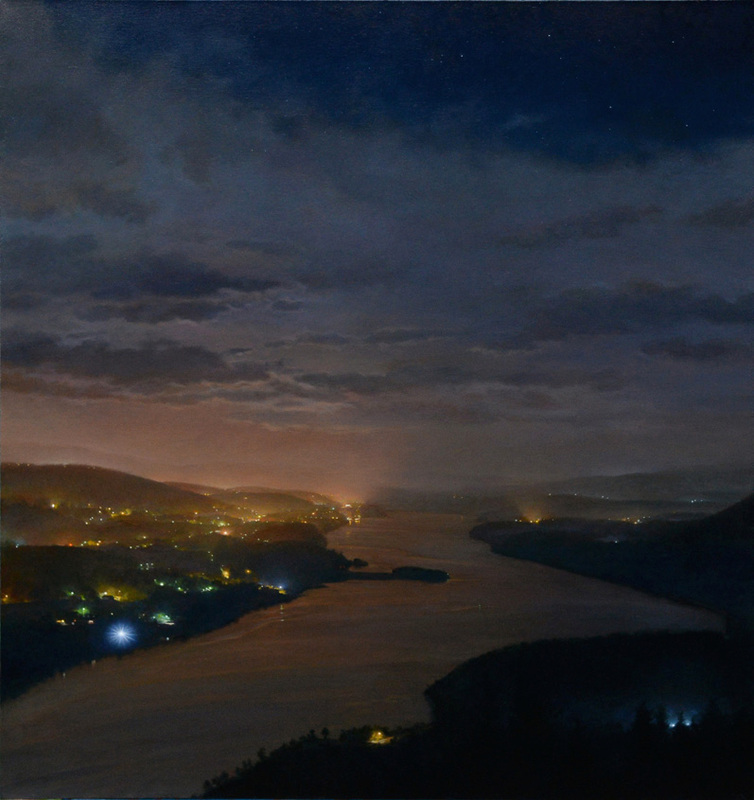
I am so impressed with the way artist Stephen Fox renders the elements of darkness, light, and fog. The way he captures the texture of light is exquisite, and his images are deliciously atmospheric and moody.


Top to bottom: Autumn Morning; Bedford Snow; Contrasting Light; Crossing The Hudson; December Swings; Hidden Message; Intersection; Light Levels; Merge: Mountain Highway; Nocturne (Point of Departure); Nocturne (Potential Communication); Palisades; The Light Of An Uncertain World

http://www.stephenfoxart.com/

Tuesday, November 22, 2016

Monday, November 21, 2016

BEAUTY: Photography--Pawel Franik

Polish photographer Pawel Franik explains his evocative series "On His Own" like this:

"The photographic series entitled 'On His Own' shows a human as an individual, as a loner in a big space that surrounds them. The purpose of this series is to draw attention to the fact of being alone, just with one’s own self. Very often, the viewers blame photographers for showing the sad picture of loneliness. I show this loneliness as something peculiar, something entirely human. Because every one of us, whether lonely or living in a happy relationship and having their own family, every one needs their moment of loneliness, the moment of devoting attention to just their own self, their own thoughts and reflections. We live in the world of tremendous acceleration and the constant quest for our purposes, in the world where there is no place for the proverbial 'minute for one’s own self', for the time when you could stop, talk to your own thoughts and feel the desirable harmony. From minute to minute, we outlive our lives and get lost in this rush. Would it be worth to stop and look deep in our hearts? The purity of form, with the minimalistic exposure of a human profile, is a deliberate measure of the photographic aesthetics. Without any unnecessary additions, in pure simplicity, form and content indicate the man’s separation as an individual in their private emotional space. The photographs of 'On His Own' series are an attempt of showing the beauty that can be seen in the vein of minimalism."


http://www.pawelfranikphoto.com/