Showing posts with label Russia. Show all posts

Wednesday, December 15, 2021

BEAUTY: Man For Winter--Alexandr

Beautiful hunky ginger man Alexandr (@personalkrampus) looks just like Kris Kringle from the classic 1970 stop motion animated holiday classic television special "Santa Claus Is Comin' To Town!"


https://www.instagram.com/personalkrampus

Monday, August 9, 2021

"Intro" by Pensees

I am floating along with sounds that seem to address the enigmatic quality of our existence. Here is "Intro" from the album "Cycle" by Russian music producer Pensees.


https://www.instagram.com/penseesmusic/

Wednesday, August 1, 2018

Just Sayin'...


If it looks like a duck, and quacks like a duck, and walks like a duck...

Monday, March 19, 2018

BEAUTY: Painting--Elena Lunetskaya and Andria Shengelia

My abstract kick continues. Russian painters Elena Lunetskaya and Andria Shengelia apparently work on their canvases in tandem. Just like yesterday's abstract artist Per Anders here, the pair call these images landscapes and while they are abstracted, one can still see the fields and cliffs in the shapes and placement. And of course I love their beautiful, fresh, spring-like color palette.


Top to bottom: Pastoral; Silver Creek; The Lake; Spring; White Gully; White Sea Tide

http://www.solomoonart.com/

Thursday, February 22, 2018

"Whatever Trump Is Hiding Is Hurting All of Us Now" by Thomas L. Friedman

Whatever Trump Is Hiding Is Hurting All of Us Now
Thomas L. Friedman | FEB. 18, 2018

Our democracy is in serious danger.

President Trump is either totally compromised by the Russians or is a towering fool, or both, but either way he has shown himself unwilling or unable to defend America against a Russian campaign to divide and undermine our democracy.

That is, either Trump’s real estate empire has taken large amounts of money from shady oligarchs linked to the Kremlin — so much that they literally own him; or rumors are true that he engaged in sexual misbehavior while he was in Moscow running the Miss Universe contest, which Russian intelligence has on tape and he doesn’t want released; or Trump actually believes Russian President Vladimir Putin when he says he is innocent of intervening in our elections — over the explicit findings of Trump’s own C.I.A., N.S.A. and F.B.I. chiefs.

In sum, Trump is either hiding something so threatening to himself, or he’s criminally incompetent to be commander in chief. It is impossible yet to say which explanation for his behavior is true, but it seems highly likely that one of these scenarios explains Trump’s refusal to respond to Russia’s direct attack on our system — a quiescence that is simply unprecedented for any U.S. president in history. Russia is not our friend. It has acted in a hostile manner. And Trump keeps ignoring it all.

Up to now, Trump has been flouting the norms of the presidency. Now Trump’s behavior amounts to a refusal to carry out his oath of office — to protect and defend the Constitution. Here’s an imperfect but close analogy: It’s as if George W. Bush had said after 9/11: “No big deal. I am going golfing over the weekend in Florida and blogging about how it’s all the Democrats’ fault — no need to hold a National Security Council meeting.”

At a time when the special prosecutor Robert Mueller — leveraging several years of intelligence gathering by the F.B.I., C.I.A. and N.S.A. — has brought indictments against 13 Russian nationals and three Russian groups — all linked in some way to the Kremlin — for interfering with the 2016 U.S. elections, America needs a president who will lead our nation’s defense against this attack on the integrity of our electoral democracy.

What would that look like? He would educate the public on the scale of the problem; he would bring together all the stakeholders — state and local election authorities, the federal government, both parties and all the owners of social networks that the Russians used to carry out their interference — to mount an effective defense; and he would bring together our intelligence and military experts to mount an effective offense against Putin — the best defense of all.

What we have instead is a president vulgarly tweeting that the Russians are “laughing their asses off in Moscow” for how we’ve been investigating their interventions — and exploiting the terrible school shooting in Florida — and the failure of the F.B.I. to properly forward to its Miami field office a tip on the killer — to throw the entire F.B.I. under the bus and create a new excuse to shut down the Mueller investigation.

Think for a moment how demented was Trump’s Saturday night tweet: “Very sad that the FBI missed all of the many signals sent out by the Florida school shooter. This is not acceptable. They are spending too much time trying to prove Russian collusion with the Trump campaign — there is no collusion. Get back to the basics and make us all proud!”

To the contrary. Our F.B.I., C.I.A. and N.S.A., working with the special counsel, have done us amazingly proud. They’ve uncovered a Russian program to divide Americans and tilt our last election toward Trump — i.e., to undermine the very core of our democracy — and Trump is telling them to get back to important things like tracking would-be school shooters. Yes, the F.B.I. made a mistake in Florida. But it acted heroically on Russia. What is more basic than protecting American democracy?

It is so obvious what Trump is up to: Again, he is either a total sucker for Putin or, more likely, he is hiding something that he knows the Russians have on him, and he knows that the longer Mueller’s investigation goes on, the more likely he will be to find and expose it.

Donald, if you are so innocent, why do you go to such extraordinary lengths to try to shut Mueller down? And if you are really the president — not still head of the Trump Organization, who moonlights as president, which is how you so often behave — why don’t you actually lead — lead not only a proper cyberdefense of our elections, but also an offense against Putin.

Putin used cyberwarfare to poison American politics, to spread fake news, to help elect a chaos candidate, all in order to weaken our democracy. We should be using our cyber-capabilities to spread the truth about Putin — just how much money he has stolen, just how many lies he has spread, just how many rivals he has jailed or made disappear — all to weaken his autocracy. That is what a real president would be doing right now.

My guess is what Trump is hiding has to do with money. It’s something about his financial ties to business elites tied to the Kremlin. They may own a big stake in him. Who can forget that quote from his son Donald Trump Jr. from back in 2008: “Russians make up a pretty disproportionate cross section of a lot of our assets.” They may own our president.

But whatever it is, Trump is either trying so hard to hide it or is so naïve about Russia that he is ready to not only resist mounting a proper defense of our democracy, he’s actually ready to undermine some of our most important institutions, the F.B.I. and Justice Department, to keep his compromised status hidden.

That must not be tolerated. This is code red. The biggest threat to the integrity of our democracy today is in the Oval Office.

Link to the original piece in the New York Times:
https://www.nytimes.com/2018/02/18/opinion/trump-russia-putin.html

Saturday, July 15, 2017

Brush Stroke Cakes by Kalabasa

Moscow-based bakery Kalabasa decorates cakes and cupcakes with hardened brush strokes of colorful ganache, rendering cakes works of art fit for Jackson Pollock!


https://kalabasa.ru/

Thursday, January 5, 2017

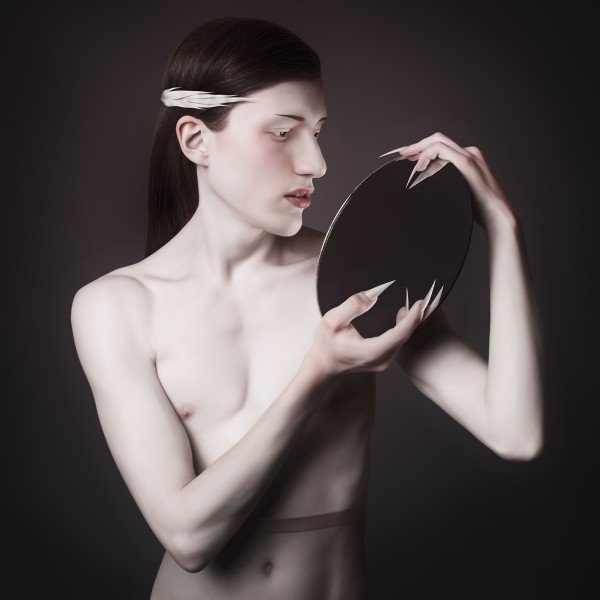
BEAUTY: Photography--Oleg Dou

The smooth bodies and blurred gender impressions of the images in Oleg Dou's Heaven In My Body series is evocative and provocative...


Take a look at Dou's fascinating approach and process (he uses Photoshop to achieve this smooth, otherworldly effect) in this charming video:


Top to bottom: 9 Tears; Flora; Narcissus In Love; Narcissus; Pet; Vampire Ballet

http://olegdou.com/

Monday, March 7, 2016

BEAUTY: Photography--Evgenia Arbugaeva

Russian photographer Evgenia Arbugaeva studied in New York and traveled to far flung locations in Asia and Africa but returned to her native country to capture haunting images of life in the harsh Russian north and the Arctic Circle.

Her time spent with Arctic hunters as they search the permafrost for mammoth tusks, with workers in mines and oil fields, on a ship sailing the ice-filled Barents Sea, or with meteorologists taking measurements under the Northern Lights has produced some absolutely breathtakingly surreal images.


http://www.evgeniaarbugaeva.com/

See more of her photojournalism work at this National Geographic article about Arctic mines and oil fields:
http://www.nationalgeographic.com/magazine/2016/03/new-arctic-thawing-rapidly-circle-work-oil/

Saturday, December 20, 2014

Wednesday, August 21, 2013

Welcome, Wentworth!


"Prison Break" star Wentworth Miller came out today in a polite but firm letter to the St. Petersburg International Film Festival declining an invitation to appear there, citing the sick and dangerous social and political climate in Russia toward civil rights for gay men and women. He wrote, ""Thank you for your kind invitation... As someone who has enjoyed visiting Russia in the past and can also claim a degree of Russian ancestry, it would make me happy to say yes. However, as a gay man, I must decline... I am deeply troubled by the current attitude toward and treatment of gay men and women by the Russian government... The situation is in no way acceptable, and I cannot in good conscience participate in a celebratory occasion hosted by a country where people like myself are being systematically denied their basic right to live and love openly. Perhaps, when and if circumstances improve, I'll be free to make a different choice."


Welcome Wentworth!
And thank you so much for standing up to Russian bigotry and homophobia.

Tuesday, July 9, 2013

Defiant Tilda!


A photograph of Academy Award-winning actress Tilda Swinton defending Russia's beleaguered lesbian, gay, bisexual and transgender (LGBT) community by holding a rainbow flag in front of Moscow's Kremlin is going viral in the blogosphere.

The star, who nabbed an Oscar for "Michael Clayton" in 2007, reportedly released the following statement on the photograph via her spokesperson: "In solidarity. From Russia with love."

Swinton's bold move comes at a particularly critical time for Russia's LGBT residents. Last month, Russian President Vladimir Putin signed a so-called "gay propaganda" bill into law which imposes large fines on residents who "provide information" about the LGBT community to minors, according to The Guardian. Similar laws had already taken effect in St. Petersburg and other cities.

Meanwhile, Putin also signed a law banning same-sex couples in foreign countries from adopting Russian children on July 3.

(original article from HuffPo, here)


THANK YOU TILDA!

Monday, December 31, 2012

Just finished reading...

...WAR AND PEACE by Tolstoy.


It’s been a while since I have written about any recently read books, and there is a good reason for that. I always try to include a classic among the many books I read each year, and this year I decided it was time for me to read WAR AND PEACE. Which took a little while. But my goal was to finish it before the end of the year, and I read the last chapter last night.

First I want to say that, at least here in the United States, this legendary book has taken on a meaning of its own, beyond what the book is, or is about. It is a stand-in for something that is insufferably long, something that one must slog through. Often that idea has a comedic meaning as well, a punch-line of sorts: “I could have read WAR AND PEACE waiting in that check-out line!” Its reputation is that it is a dreary, dreadful affair, the kind of bone-dry, academic book that no one really wants to read, the kind of book high school students are forced against their wills to read. But since ANNA KARENINA is one of my favorite pieces of literature, I had faith in Tolstoy’s story-telling powers, so I plunged in. After all, the book of a thousand pages begins with Page One. And honestly…it’s just a book…paper with some ink printed on it…nothing that threatening.

I will admit that WAR AND PEACE is long, but it is in no way dry or dreary. Like ANNA KARENINA, the breathtaking scope of the narrative is epic and sweeping, incorporating many different characters over the course of many years, from 1805 to 1820. The WAR of the title is of course the Napoleonic wars in Eastern Europe and Russia. But the PEACE is just as important, to serve as a counterpoint, and a way to illustrate the approach of the upper classes and Tsar Alexander I toward Napoleon and the invasion.

The story traces five families throughout this period, and how their lives are changed and shaped by the waves of war that ebb and flow during this period of history. And just like in ANNA KARENINA, Tolstoy has a masterful way of drilling deep into the mind and soul of a certain character, capturing the texture and thought process of a particular person, only to do the same with the next character. But it is shocking to see how thorough he is in his portrayals. Just when I accept as normal certain concerns, certain outlooks, certain beliefs as the tone of the story, he hops into the mind of another and the tone is turned on its head as we explore the concerns, outlooks, and beliefs of this next person. He is dedicated to making these characters come alive, whether they are good and noble or selfish and petty. All are worthy of exploration since they all exemplify the human condition.

The concerns of the women left at home range from situation to situation, but as one might imagine during that period, generally the women are left to care for children, elderly parents, or homes, or, if they are younger, wonder about attending dances and whom they will eventually marry. We bounce between these domestic and social scenes in Moscow and Petersburg and battlefields scattered across Eastern Europe and Russia.

And it is these war scenes and battlefield accounts that really took me by surprise. I am not now, nor have I ever been fascinated by war. I know history and I know about the major wars, but I do not study battles the way Civil War groupies do in this country, I do not pore over the History Channel documentaries about Hitler and WWII, and I do not gravitate toward war films. But because I know such people and their peculiar (to me) predilections exist, I suppose I am used to a kind of American view of war. And that view turns war into a hobby, something to be studied for fun or as a pastime, something to be re-enacted, and by extension, something to be held up with positivity, something to be glorified. I do not share this view, but it was still shocking to come across vivid descriptions of the reality of war. Tolstoy shows us that war is not what it seems, even to those in Moscow or Petersburg. War—especially hand to hand combat—is something slow and messy and personal and confusing. It takes a lot of fortitude to run up to someone and bayonet them or swipe at them with a saber. Nicholas, one of our young men we follow in the story, takes down a French officer in a battle, but once the enemy is down, Nicholas is alarmed to see that the officer is actually a young man, much like himself or his school chums, a young man with a dimpled chin and light-blue eyes filled with terror, apprehension, and uncertainty about what will happen to him, to his life force. It is a shocking moment, not only for the readers, but also for Nicholas who is profoundly shaken by the encounter and actually becomes quite depressed, confused about the meaning of “heroism” in war (afterward, Nicholas says to himself of the encounter, “So others are even more afraid than I am!”), wondering what the point of war is, and why men follow leaders who make war. And there are many such scenes which look unflinchingly at how any battle seems nonsensical and surreal to those actually in it. I liken it to a car accident. We see such scenes on television and in films: the angle is perfect, the lighting is good, and the soundtrack captures a true “cinematic” moment. But until you are riding in a car and are struck by another vehicle so entirely unceremoniously, and you hear not a soundtrack or a special sound effect, but simply the dull thud of fiberglass against your door, and a ripping sound followed by the sound of shattering glass, and you feel the absolute nonsensical, surreal, confusing feeling of the trauma to your body, you can’t possibly understand how immediate it all is, how quickly it can be over despite feeling as if it is happening slowly, and how truly destructive it can be.

The effects of war are shown as equally destructive with one of our major heroes being taken prisoner by the French, and losing a few other characters to enemy fire (I was quite saddened at the death of one character I had grown particularly fond of since his temperament and philosophy reminded me of my own). Later in the book, Tolstoy devotes chapters to trying to understand the reasons for war, the particular successes or failures of one side or the other, and what makes men make the decisions they do. Tolstoy examines such things from a very philosophical, even metaphysical, point of view. He claims that winning or losing, success or failure of a war cannot be traced to a single battle, cannot be traced to the will of one man, such as Napoleon or Alexander I. Such things are due to innumerable causes traced back hundreds, perhaps even thousands of years. He says that historians try to examine all events in a vacuum, away from anything else, but there can be no beginning of an event since all events flow into one another and are connected. It is possible to strategize about where to move your left flank or to give commands or orders to advance a regiment, but it is impossible to see through time and space, through the will of every living human, and to plot a winning war. As Tolstoy says, “Only unconscious action bears fruit and he who plays a part in an historic event never understands its significance.”

I also received an unexpected world history lesson in this novel. I was vaguely aware of the Napoleonic Wars, 1812, The Battle of Borodino, etc., but I suspect that my high school World History class was woefully lacking. It was fascinating to check up on historical facts as I followed these men and women through the battles and the awful aftermath, like the burning of Moscow!

The only small critique I will dare to put forward is that toward the end of the book, these philosophizing chapters examining the cause and effect of war and historians' lack of ability to grasp the real meaning, the higher meaning behind it all, tends to overtake the story. In fact, the Second Epilogue is entirely a treatise about this very subject, the main story having ended in the First Epilogue. Perhaps this is where the novel gets its reputation as something dry and academic. But truly, it is a small part of the experience.

Recommend? Yes. Just jump right in. It might take a bit of commitment to keep with it, but it is worth it.