Showing posts with label gender roles. Show all posts

Thursday, April 9, 2020

Coronavirus reveals just how deep macho stereotypes run through society by Stephen Burrell and Sandy Ruxton

Yet more proof of toxic masculinity...a fascinating article from The Conversation US.


Coronavirus reveals just how deep macho stereotypes run through society
April 9, 2020 6.59am EDT
by Stephen Burrell and Sandy Ruxton


Early indications suggest more men are dying from COVID-19 than women – although some countries, including the UK, are not publishing data on this.

Experts are unsure exactly why this might be. It may in part be due to differences in biology. Suggestions have been made, for example, that it might be because men and women have a different immune response, and that men’s immune systems may not activate in the same way as women’s to fight the virus. But lifestyle and behaviour are also likely to play a role.

For a start, men are more likely to have underlying health problems relevant to COVID-19 – such as high blood pressure, cardiovascular disease and some chronic lung diseases. This is in part because men are more likely to engage in risky behaviour such as smoking, drinking and drug-taking.

Research also seems to indicate that some men may take personal hygiene – such as handwashing – less seriously than women. This could be due to the fact that cleanliness is often associated with femininity, domesticity and beautification.

However, the writer Caroline Criado-Perez has also pointed out that because most medical research focuses on male bodies, there is a lack of understanding about why women may be better able to fend off this virus.

Loneliness and social isolation
The COVID-19 pandemic has also highlighted the different roles men and women are still expected to play in society – men are not only less likely to take care of themselves, but also less likely to be involved in caring for others.

It is striking how much women are depended on to deliver both low-paid and unpaid care work – whether for children, disabled people, older people, or those in ill health. Indeed, the pandemic is placing additional caring responsibilities on women.

COVID-19 is forcing people to reflect upon human fragility, mutuality and interdependence. But gender norms also require men to be invulnerable – always strong and self-sufficient.

Men, who also tend to socialise more in groups in public, may take social distancing less seriously than women. They may find it difficult to accept they need help, too – seeing it as “unmanly” to do so.

Older men in particular are more likely to experience loneliness and social isolation – and this could put them at increased risk of mental health problems.

Lockdown impacts
Gender norms also expect men to be powerful and in control. So while many men may relish the opportunity to be more involved at home, some have used it to assert more dominance and control over their partners and children.

For many women and children, the home is the most dangerous place to be. The UK’s National Domestic Abuse Helpline has seen a 25% increase in calls since lockdown began – which highlights how quarantine can compound domestic and sexual abuse.

Porn sites have also seen increased traffic and some are offering free access during lockdown. Campaigners have warned that this, along with an increased reliance on technology, could contribute to a rise in online harassment and sexual abuse.

Responses to COVID-19
Men’s voices are dominating government responses to COVID-19, and the approaches of many governments are increasingly shaped by masculinist politics.

The UK government and its nearly all male “war-cabinet”, for example, declared “war” on the coronavirus. This is a problematic analogy as what is mainly needed to tackle COVID-19 is care, social solidarity and community support – not fighting and violence.

Some world leaders on the other hand have been alarmingly dismissive of the pandemic, as if their countries were too tough to be affected by the disease.

These patriarchal discourses can have serious implications for government policy, such as encouraging overly militaristic, authoritarian approaches, and prioritising male-dominated sectors of the economy and society. For instance, women are more likely to be in temporary, informal or precarious work which falls outside the protection packages being established.

There is also a danger that, as with previous crises, government support will prioritise industries seen as “strongest for the economy” – and dominated by men – such as aviation, car production and construction. This could again result in vital sectors where women are more prominent being neglected: such as education, care and retail.

This is why there is an urgent need for gender analysis of government measures related to COVID-19, and the impact these have on different social groups. There must also be a dramatic increase in funding for services to help those at risk of domestic and sexual abuse.

But more broadly this crisis is a huge opportunity to reassess political priorities and gender relations. It offers the chance to overturn years of neglect by recognising the essential contribution of care to society. This will not only help to encourage men to play their part, but it will go some way towards shifting harmful gender norms in the aftermath of the COVID-19 pandemic.

Link to the original article:
https://theconversation.com/coronavirus-reveals-just-how-deep-macho-stereotypes-run-through-society-134968

Tuesday, January 8, 2019

BEAUTY: Misc. London Fashion Week Men's

I feel a tiny bit badly for London Fashion Week Men's. With great fanfare in 2012, it was announced that London Fashion Week, hitherto showing mostly women's collections, was expanding to include a week dedicated to men's collections. Originally entitled London Collections: Men, it drew back hometown talent. Sarah Burton brought McQueen back to London, and Vivienne Westwood came home to show as well, alongside other venerable London menswear designers and Savile Row names who never left. But over the years, the talent has trickled away: Burton returned McQueen to Paris, and Westwood went back to showing in Milan, which I guess makes sense since that is where her company is based. Other talents have simply decided not to show at all, and now here we are, under a slightly different moniker--London Fashion Week Men's--and it seems that the big names have mostly all gone. There is some talent but they are younger, unproven. One can feel that these brands have yet to find their footing, and that is fair...an artist needs time to explore. But it just feels that things in London have dried up a bit (sorry Craig Green, sorry Hussein Chalayan, you are wonderful but the landscape seems a bit dry)...

But there were a few interesting little tidbits, so here are some highlights from the first week of our fashion tour, Fall-Winter '19-'20 London Fashion Week Men's:

For their first stand alone show, Art School (Eden Loweth and Tom Barratt) showed a daring collection that was for and about the LGBTQI community and, much like Charles Jeffrey's Loverboy show (here), featured gender non-binary clothing. I personally think this is an exciting area for fashion to explore, and a likely area as well, since fashion at this level truly can be about societal changes and politics. As I mentioned in my posting about the Loverboy show of this season, all clothing is unisex if you really think about it. Clothing itself has no gender--a piece of clothing is an inanimate object made of fiber or leather or metal, and cannot possess a gender. (Comedian Eddie Izzard famously said, "They're not women's clothes. They're my clothes, I bought them.") But cultures across time have assigned masculine and feminine qualities to not only the behavior of men and women but also what they are culturally sanctioned--or forbidden--to wear based on perception of gender at the time. And if you look over history, you can see that there have been times when men were assigned garments (and make-up!) that are now considered only for women. And of course it has been acceptable for a long while now (a hundred years or so) for women to wear men's clothing because that is a symptom of the gender assignments based on the rule of men. As the famous quote from the film "The Cement Garden" goes, it is okay for women to wear men's clothing because a man is seen as something powerful and something to strive toward, but for a man to wear women's clothing is degrading because it is a collective societal viewpoint that being a woman is degrading. Woman are seen as having less power, they are weaker, they are "hysterical" or unpredictable, they are "too emotional" and easily swayed, they are paid less and worth less, their place is the home or in the bed. I think the #MeToo movement has proven that despite cultural and societal progress, women are still used and objectified. Just look at ads in magazines, on television, on billboards, in social media...and really objectively look at how women are sexualized and often fetishized, as they lounge around, near, or amongst a product. Now imagine a man dressed the exact same way and presented in the same fetishized way, and you can see the problem. Femininity is used, is wielded, is perverted. Once our culture at large sorts out its feelings about women and the truth of femininity, then we might be able to have a society where men and women get to wear whatever the hell they want without feeling that their "power" or "status" is in question.

Having said all that, I am glad that Art School are taking on this important work, but they need time to develop as artists. The collection felt a bit rag-tag. I show the below highlights anyhow...


It is usually effective when designers play with scale and perspective, upsetting expectations, and Pronounce (Yushan Li and Jun Zhou) showed duffle coats with delightfully unexpected large toggle closures. They also added chains of charms (they look like Southwestern conchas) to ankle boots and shoes, but while they look fascinating on the runway, they must be awkward to walk in.


Khalid Qasimi's collection was built around...*yawn*... sportswear, but he utilized images from legendary gay illustrator Mel Odom whose work has graced numerous album and book covers. That detail saved the collection...


Here are a few more images by Odom:


And Siying Qu and Haoran Li, who create under the brand Private Policy, called their show "Human vs. Money" which certainly had a lot to say about the corrosive effects of cash. Of course the people who say "Money can't buy happiness" have never really had to suffer or struggle--money may not be able to buy happiness, but it can buy safety, clothing, shelter, food, an education. It can buy the things that can allow one to live a happy life. Money buys power too, and this is where things start to go off the rails. Power corrupts and the acquisition of wealth for its own sake leads to unchecked greed and the kind of inequality that we are seeing in the world right now. In a comment on this toxic Capitalism (Capitalism that has lost its moral compass), Private Policy created acrylic backpacks and vests lined with shredded American cash shown on models who are pointedly manacled. Look at the cash stuffed in the last model's mouth--as though the gag is both a bribe to keep from speaking and a way of causing one to choke to death.


https://www.artschool-london.com/
http://pronouncestudio.com/
https://www.qasimi.com/
http://www.privatepolicyny.com/

Friday, September 28, 2018

"Singularity" by Jon Hopkins and "Love SOS" by Justice

Anger is an energy. It can be a reaction to injustice.

Spend a little bit of time unpacking the possible injustices underneath these stories.

Jon Hopkins: "Singularity."


Justice (French duo Xavier de Rosnay and Gaspard Augé): "Love SOS."


Jon Hopkins' most recent album "Singularity" is out now.
http://www.jonhopkins.co.uk/

Justice's new remix album "Woman Worldwide" is out now.
http://www.justice.church/

Thursday, January 5, 2017

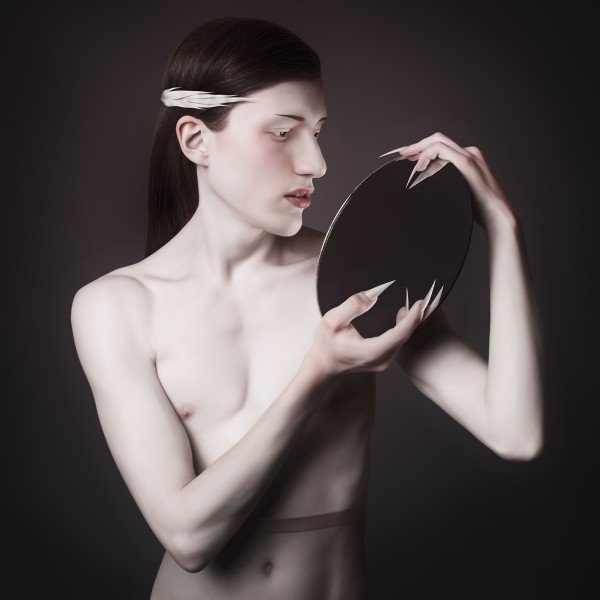
BEAUTY: Photography--Oleg Dou

The smooth bodies and blurred gender impressions of the images in Oleg Dou's Heaven In My Body series is evocative and provocative...


Take a look at Dou's fascinating approach and process (he uses Photoshop to achieve this smooth, otherworldly effect) in this charming video:


Top to bottom: 9 Tears; Flora; Narcissus In Love; Narcissus; Pet; Vampire Ballet

http://olegdou.com/

Tuesday, November 25, 2014

A Color Thesaurus

At a loss as to how to describe a color?

Parent hue is in the top left corner of each chart, created by Ingrid Sundberg.


Since I am an interior designer, I have seen many couples face the "color conundrum" in which women seem to see more tints, tones, and shades than men, illustrated below. I am not sure if it is an actual physiological difference in the eye itself (I know color blindness exists almost exclusively in men) or just a stubbornly-adopted, false gender affectation in men. Think I am exaggerating? Just try to get an average heterosexual man to wear a pink shirt...he will act like it is kryptonite that will sap him of all his energy and end his life.

Monday, January 30, 2012

True That, Iggy


"Girls can wear jeans and cut their hair short, wear shirts and boots, because it's OK to be a boy, but for a boy to look like a girl is degrading, because you think that being a girl is degrading. But secretly you'd love to know what it's like, wouldn't you? What it feels like for a girl?"
--Julie played by Charlotte Gainsbourg in the film "The Cement Garden" from the book of the same name by Ian McEwan