Showing posts with label Dutch. Show all posts

Tuesday, October 8, 2024

LGBT History Month 2024: Willem Arondéus

Willem Arondéus
Photo courtesy of Marco Entrop,
Het Verzetsmuseum Amsterdam (Dutch Resistance Museum)

Future hero Willem Arondéus was born in 1894 in North Holland, Netherlands. After a career as an illustrator, he began writing poetry and novels, illustrating many of his books himself. But everything changed with the coming of the Nazis and WWII.

Wikipedia recounts his work with the resistance: In 1942, Arondéus started an underground periodical called the Brandarisbrief. In 1943, the Brandarisbrief merged with another publication called De Vrije Kunstenaar. Through the merger, Arondéus met Gerrit van der Veen, the editor of De Vrije Kunstenaar. In the resistance, van der Veen specialized in forging identity cards. As a result, Arondéus also became involved in creating forged documents, along with lesbian resistant Frieda Belinfante. A major detriment to the success of these forgeries was the Municipal Office for Population Registration as its existence made the forgeries less useful, since their legitimacy could be checked against the registration lists and determined to be fakes. Arondéus and van der Veen, along with a number of associates, developed a plan to destroy the registration office.

Their attack, which took place on 27 March 1943, was partially successful, and they managed to destroy 800,000 identity cards (15% of the records), and retrieve 600 blank cards and 50,000 guilders. The building was blown up and no one was caught on the night of the attack. However, due to an unknown betrayer, Arondéus was arrested on 1 April 1943. Arondéus refused to give up the rest of his team but his notebook was found, and as a result, a majority of the group were also arrested. Belinfante was the sole person from the group to have survived, forcing her to take on a man's identity and go undercover.

On 18 June 1943, Arondéus was tried and sentenced to death by firing squad, along with 13 other men who participated. Two of the group received clemency, but the others were executed on 1 July 1943. Arondéus pleaded guilty and took the full blame, which may be why two young doctors were spared from execution and given custodial sentences instead. Before his execution, Arondéus made a point of ensuring the public would be aware that he and two other men in the group, Bakker and Brouwer, were gay, asking either a friend or his lawyer (accounts vary) to "Tell people that homosexuals are not cowards." (In Dutch: "Zeg de mensen dat homoseksuelen niet per definitie zwakkelingen zijn.")

In 1945, after the liberation of the Netherlands, Arondéus's family was awarded a posthumous medal by the Dutch government in his honour. In 1984, he was awarded the Resistance Memorial Cross. On 19 June 1986, Yad Vashem recognized Arondéus as Righteous Among the Nations.


December, page from a calendar illustrated by Willem Arondéus,
at the Rijksmuseum, Amsterdam, Netherlands
November, page from a calendar illustrated by Willem Arondéus,
at the Rijksmuseum, Amsterdam, Netherlands
October, page from a calendar illustrated by Willem Arondéus,
at the Rijksmuseum, Amsterdam, Netherlands
Illustration by Willem Arondéus

https://en.wikipedia.org/wiki/Willem_Arondeus

Tuesday, October 17, 2023

BEAUTY: Painting--Alice Brasser

The rich, autumn-y colors of Alice Brasser's pastoral works seem to fit this time of year beautifully...


Top to bottom: Bermbloemen #15; Chestnut; Dahlias #5; Field - Tree Lane; Flaming Flowers; Hawthorn Berries; Roadside Flowers; The Field #11; The Field - Sunflower

Her work is available for purchase! Contact her at her website:
https://www.alicebrasser.com/

Wednesday, October 4, 2023

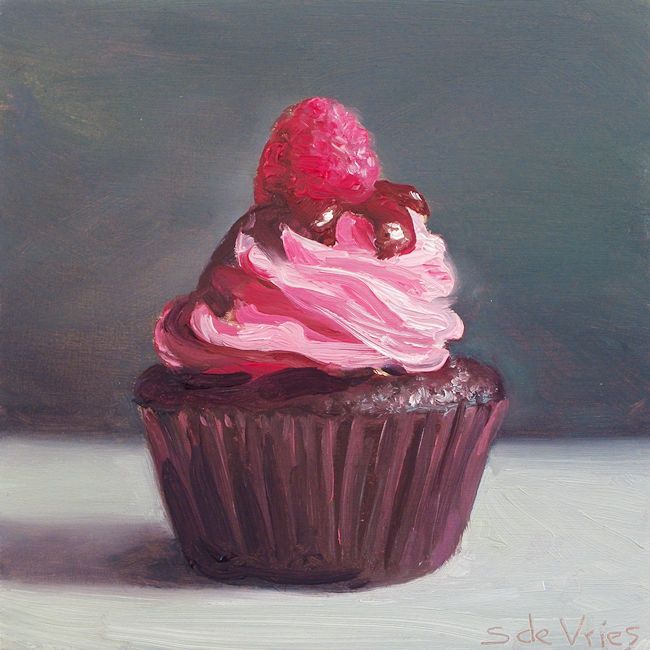
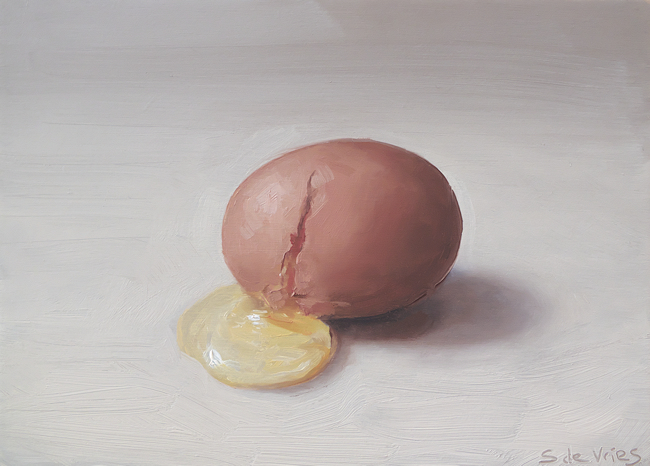
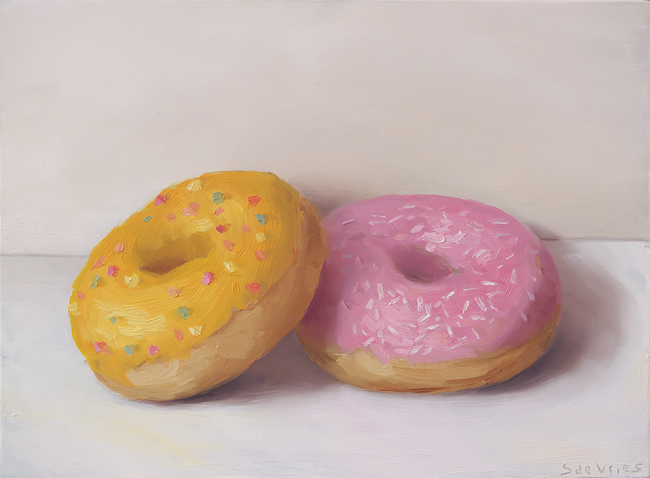
BEAUTY: Painting--Serge de Vries

I love Dutch artist Serge de Vries' whimsical, satisfying paintings of various foods. A set of these would be charming in a kitchen! And as I have said so many times in the past, I love when artists use painting like cake frosting...it is wonderful to see swirls and gobs of color!


You can buy original paintings on his site!
https://www.sergedevries.nl/

Saturday, November 27, 2021

"Retrogg" by Callecat

"Retrogg" by Dutch DJ and musician duo Callecat (Koen and Gijs from Utrecht)...compelling, driving, hypnotic electronic sounds...swirling and pulsing, taking you to another plane...


https://www.callecatmusic.com/

Monday, September 14, 2020

BEAUTY: Photography: Franciscus & Franciscus

The Dutch team of Franciscus & Franciscus--consisting of the joined forces of artist F. Franciscus and his husband, graphic designer and stylist Rienus Gündel Franciscus--are working on an on-going, highly stylized series of photographic portraits they call Pilgrimage.

They say, "Inspiration came from monks painted by, among others, Zurbarán, Rembrandt and Greco."


https://fransfranciscus.nl/
http://rienus.info/

Thursday, July 23, 2020

Santcum by Levi van Veluw

Late last summer 2019, artist Levi van Veluw created an incredible installation, Sanctum, shown at Tenuta Dello Scompiglio, an Agricola and art/cultural showcase outside of Lucca, Italy.

This intense, transcendent space resonates with me deeply for many reasons and on many levels. I will let the artist explain:

"The installation Sanctum, developed especially for Tenuta Dello Scompiglio, testifying of a fictitious religious conviction, engages all the senses of the visitor. The last room where visitors ended their journey in Kerguénnec, nell'installazione 'The relativity of the matter', becomes the starting point for a more elaborate proposition in the expositive space of Dello Scompiglio. Levi van Veluw based Sanctum on of the first religious buildings, the Tabernacle, also called the tent of meeting. This tent served as a place of worship and symbolized God’s presence amidst those who had gathered.

The interior of the Tabernacle consisted of 3 spaces: the Forecourt, the Holy Place and the Holy of Holies, sacred in ascending gradation. Like the Tabernacle, Levi van Veluw’s work features symmetry and harmony, to express the strive for divine perfection and reflect the divine holiness through the careful gradations of the three phases. As such, he plays with the age-old composition of the religious structure and thereby lures the spectator deeper and deeper into the Sanctuary.

After a long descent, a mysterious dark blue glow shines through a narrow crack in the wall. The visitor enters through this opening into a high-ceilinged, underground space, the forecourt. Massive columns emerge on both sides and mountains of coal lie scattered across the floor, while the path in the centre is kept open. Static forms set in repetitive sequences recall the structure of an ecstatic building, made to glorify an unknown higher purpose. The space slowly comes into view, an open passage at the end leads to what appears to be a ritual environment, the Sanctuary. Fragrant water flows through an ordered pattern of geometric incisions in the floor. At the centre, there is a chapel, composed of a detailed network of grids, boxes and openings, the Holy of Holies.

Is this an opening to a new world in which religion, again, plays an important role? Or does the artist use existing symbolisms to lure the mind into a new religion? These are questions the artist leaves the spectator with."


Please do take three minutes to watch this beautiful walk-through of the installation which will give you a clearer picture.


Many years ago, in what seems like another life now, I attended regular Friday night services at a Hindu ashram in Oakland, California. They were wonderful times, but the thing that sticks with me is the magnificent sensory experience of the main Meditation Hall. It was bathed in a low indigo-violet light and the heady smell of incense (delicious Nag Champa and Dhoop). After a video talk by the guru (or sometimes a live talk if the guru was in residence), we would chant or sing in Sanskrit (thankfully it was always projected in phonetic English on a wall), and I regularly had transcendent experiences in which I felt a unique consciousness shift. It was very special and van Veluw's Sanctum seems like it has a similar feeling with its deep, penetrating color and fragrant water, and the sense of a place that is a manifestation/representation, however limited it may be, of a state beyond the physical.

And this profound installation has been resurrected for a site specific presentation at Het HEM, a former ammunition factory, now a home for contemporary culture, in the Dutch city of Zaandam. The artist refers to it as a semi-permanent installation, so it seems to be an open-ended chance to see this marvelous piece.

"Sanctum is a deep blue chapel that appears to float in between two floors. The work invites for contemplation while examining what the architecture of the spiritual consists of. Why do we assign value to objects, to the tangible, within the immaterial realm of faith? What is the basis of our devotion to altars, relics and icons? In the colossal space of Het HEM, Sanctum tests the boundary between an artistic and a spiritual experience."

What the artist is really working with is the idea of symbols and stand-ins for ideas and states of consciousness that are beyond our physical world. These objects become the machinery of the sacred, while ritual is the technology of the sacred. Of course these things can be used in ways that are not so pure or transcendent, which is the basis of a great portion of human suffering. But in a pure form, objects and rituals can be illuminating and serve as a connection to a place in us to which we all, all of us, personally have access.


https://levivanveluw.com/