
I've seen lots of Philip Guston's paintings over the years at various museums around the world, and only now do I realize I have been seeing his later works. Here is a wonderful, short documentary about Guston and his career, made by the Tate Museum as part of the Terra Foundation for American Art Series: New Perspectives.
https://www.philipguston.org/home
https://www.tate.org.uk/whats-on/tate-modern/philip-guston
Showing posts with label documentary. Show all posts
Showing posts with label documentary. Show all posts
Sunday, January 28, 2024

Friday, October 21, 2022
Just watched...
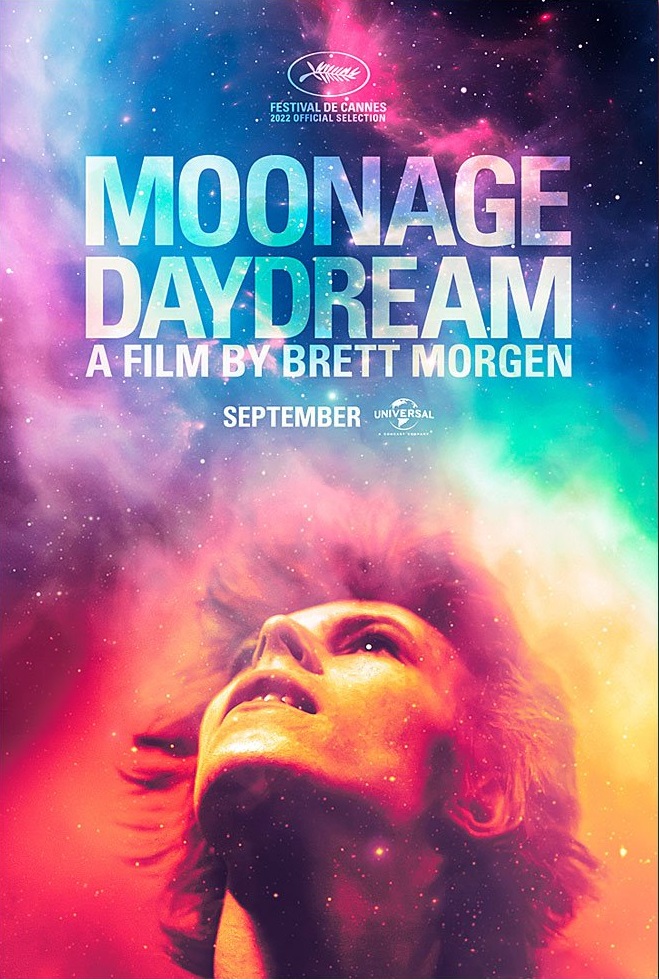
..."Moonage Daydream," the David Bowie film directed by Brett Morgen.

As a life-long David Bowie fan, I was looking forward to this film but was not quite prepared for the form it took, and director Morgen has accomplished quite a feat of filmmaking. It's not a bio-pic (no actor plays Bowie), and it doesn't quite feel like a documentary either (there are no talking-head interviews with contemporaries or friends or family of Bowie, and no review of his life)--yet, fittingly, it is the first feature to be fully authorized by the Bowie estate. But if it's not those things, then what is it?
As its name suggests, this is less of a film and much more of a dream, an hallucination, a prayer. Presenting images and songs somewhat in chronological order, the only voice for a narrative is Bowie's own. Through a mix of what sound like pensive recordings Bowie made himself and press interviews, we hear him musing on profound, spiritual, and existential questions. Of course anyone who ponders such questions feels those questions deeply, through their soul. And that is where the impulse, the elan to create lies. It is a disarming and unexpectedly intimate experience listening to Bowie speak this way, and reflect on how his own spirit and mind evolved by allowing himself to evolve as an artist. And all while watching a swirling kaleidoscope of Bowie's many looks and characters--including a glimpse into the Bowie archive of five million different items, paintings, drawings, recordings, photographs, films ("The Man Who Fell To Earth," "Just A Gigolo," Merry Christmas, Mr. Lawrence," "The Hunger," and rare clips of Bowie on stage in the Broadway production of "The Elephant Man"), and journals--along with relevant stock footage and film clips from sources as varied as the 1922 "Nosferatu," the 1928 "The Passion of Joan of Arc," Salvador Dalí and Luis Buñuel's 1929 short masterpiece "Un Chien Andalou," "The Wizard of Oz," "2001: A Space Odyssey" (not "Oddity"), and "A Clockwork Orange."
And naturally we get to hear Bowie's music but what struck me was the mash-ups of songs with studio versions, live versions, remixes...and the juxtapositions between songs, all beautifully produced by longtime Bowie collaborator Tony Visconti.
The result is a glorious, impressionistic reverie of color, shape, and sound...or "Sound and Vision"...
Recommend? Yes, absolutely. Especially if you are a Bowie fan. And if you are unfamiliar (and, perhaps through no fault of your own, have been living under a rock), you won't get a definitive account of the man and his life...just sit back and take it in. Feel him and experience who he was and is. If you miss it playing at a theatre, not to worry: it will be streaming this coming spring of 2023 on HBO MAX.
https://www.moonagedaydream.film/home/
https://www.davidbowie.com/
As a life-long David Bowie fan, I was looking forward to this film but was not quite prepared for the form it took, and director Morgen has accomplished quite a feat of filmmaking. It's not a bio-pic (no actor plays Bowie), and it doesn't quite feel like a documentary either (there are no talking-head interviews with contemporaries or friends or family of Bowie, and no review of his life)--yet, fittingly, it is the first feature to be fully authorized by the Bowie estate. But if it's not those things, then what is it?
As its name suggests, this is less of a film and much more of a dream, an hallucination, a prayer. Presenting images and songs somewhat in chronological order, the only voice for a narrative is Bowie's own. Through a mix of what sound like pensive recordings Bowie made himself and press interviews, we hear him musing on profound, spiritual, and existential questions. Of course anyone who ponders such questions feels those questions deeply, through their soul. And that is where the impulse, the elan to create lies. It is a disarming and unexpectedly intimate experience listening to Bowie speak this way, and reflect on how his own spirit and mind evolved by allowing himself to evolve as an artist. And all while watching a swirling kaleidoscope of Bowie's many looks and characters--including a glimpse into the Bowie archive of five million different items, paintings, drawings, recordings, photographs, films ("The Man Who Fell To Earth," "Just A Gigolo," Merry Christmas, Mr. Lawrence," "The Hunger," and rare clips of Bowie on stage in the Broadway production of "The Elephant Man"), and journals--along with relevant stock footage and film clips from sources as varied as the 1922 "Nosferatu," the 1928 "The Passion of Joan of Arc," Salvador Dalí and Luis Buñuel's 1929 short masterpiece "Un Chien Andalou," "The Wizard of Oz," "2001: A Space Odyssey" (not "Oddity"), and "A Clockwork Orange."
And naturally we get to hear Bowie's music but what struck me was the mash-ups of songs with studio versions, live versions, remixes...and the juxtapositions between songs, all beautifully produced by longtime Bowie collaborator Tony Visconti.
The result is a glorious, impressionistic reverie of color, shape, and sound...or "Sound and Vision"...
Recommend? Yes, absolutely. Especially if you are a Bowie fan. And if you are unfamiliar (and, perhaps through no fault of your own, have been living under a rock), you won't get a definitive account of the man and his life...just sit back and take it in. Feel him and experience who he was and is. If you miss it playing at a theatre, not to worry: it will be streaming this coming spring of 2023 on HBO MAX.
https://www.moonagedaydream.film/home/
https://www.davidbowie.com/
Friday, May 3, 2019
"Landline" by Matt Houghton
In 2010, Keith Ineson, a chaplain from Cheshire set up a helpline for gay farmers. "Landline" journeys into the world of the people who called.
SYNOPSIS
Landline is a short documentary about the only helpline in the UK for gay farmers. Through a series of recorded telephone conversations and reconstructive visuals, the film uses the helpline as a lens through which to view the experiences of LGBTQ people in the British farming community.
In a world that prizes traditional masculinity and in which ideas of ancestry are fundamental, being gay can be isolating. Suicide rates are extremely high in both young farmers and gay men in particular, and combining these can be a recipe for tragedy. But there are also thriving gay scenes in the most rural of towns, stories of unexpected friendships and relationships, and moments so unlikely that they could only happen in real life. Candid, intimate and shocking, Landline is a snapshot of a group of people bound together by circumstance but so often isolated from each other.
DIRECTOR'S STATEMENT
I have always been drawn to ideas surrounding shared experience. Speaking to a good friend Rupert Williams one evening, we got talking about what it was like for him growing up in a farming family as a queer man, and the unique sense of isolation that he felt. As we researched further, we began to understand the extent to which being an LGBTQ farmer was so heavily wrapped up in ideas of identity. Keith Ineson’s helpline seemed a unique lens through which to explore these ideas. Over the course of about a year, we collected stories and experiences from LGBTQ farmers who have at one time or another called the helpline. A series of recorded telephone conversations emerged as the emotional centre of the film.
I work in both documentary and scripted film. In recent years I have become increasingly interested in making films that experiment with story structure and that blur the boundaries between fact and fiction. The idea with Landline was to create an active conversation where the stories of a group of individuals compound and react with each other to paint to broader picture. It is an experiential take on the documentary form with the helpline at its centre. It is the honesty and openness of our contributors that made this film possible. To me it is defined by its intimacy but in depicting the very personal, my hope is that it poses questions about much broader ideas surrounding community, family and masculinity.
http://www.landlinedocumentary.co.uk/
http://www.itsmatthoughton.co.uk/
SYNOPSIS
Landline is a short documentary about the only helpline in the UK for gay farmers. Through a series of recorded telephone conversations and reconstructive visuals, the film uses the helpline as a lens through which to view the experiences of LGBTQ people in the British farming community.
In a world that prizes traditional masculinity and in which ideas of ancestry are fundamental, being gay can be isolating. Suicide rates are extremely high in both young farmers and gay men in particular, and combining these can be a recipe for tragedy. But there are also thriving gay scenes in the most rural of towns, stories of unexpected friendships and relationships, and moments so unlikely that they could only happen in real life. Candid, intimate and shocking, Landline is a snapshot of a group of people bound together by circumstance but so often isolated from each other.
DIRECTOR'S STATEMENT
I have always been drawn to ideas surrounding shared experience. Speaking to a good friend Rupert Williams one evening, we got talking about what it was like for him growing up in a farming family as a queer man, and the unique sense of isolation that he felt. As we researched further, we began to understand the extent to which being an LGBTQ farmer was so heavily wrapped up in ideas of identity. Keith Ineson’s helpline seemed a unique lens through which to explore these ideas. Over the course of about a year, we collected stories and experiences from LGBTQ farmers who have at one time or another called the helpline. A series of recorded telephone conversations emerged as the emotional centre of the film.
I work in both documentary and scripted film. In recent years I have become increasingly interested in making films that experiment with story structure and that blur the boundaries between fact and fiction. The idea with Landline was to create an active conversation where the stories of a group of individuals compound and react with each other to paint to broader picture. It is an experiential take on the documentary form with the helpline at its centre. It is the honesty and openness of our contributors that made this film possible. To me it is defined by its intimacy but in depicting the very personal, my hope is that it poses questions about much broader ideas surrounding community, family and masculinity.
http://www.landlinedocumentary.co.uk/
http://www.itsmatthoughton.co.uk/
Thursday, August 9, 2018
Robyn Sings "Missing U" and Goes To Her Party
I just love the music of Swedish singer Robyn (previously here and here). She sings songs that ring out beautifully on a dance floor but somehow she manages to build her songs out of heartfelt, emotional lyrics. Her approach is earnest and sweet and marries what it is to be uninhibited on a dance floor in a sense of euphoria with all the sadness and heaviness of life...since the highs and lows/the ups and downs are intertwined and do not exist without each other.
Here is her newest song, "Missing U" that ticks all the afore-mentioned boxes: an awesome beat for dancing, a slinky electronic sound, touching lyrics, and a chorus musically engineered for maximum emotional impact.
And here is a very touching, delightful mini-documentary about a group of Robyn fans in Brooklyn who began to host a Robyn-themed dance night at a venue...

http://robyn.com/
Here is her newest song, "Missing U" that ticks all the afore-mentioned boxes: an awesome beat for dancing, a slinky electronic sound, touching lyrics, and a chorus musically engineered for maximum emotional impact.
And here is a very touching, delightful mini-documentary about a group of Robyn fans in Brooklyn who began to host a Robyn-themed dance night at a venue...

http://robyn.com/
Tuesday, June 26, 2018
"Westwood: Punk, Icon, Activist"
Seeing as fashion season just ended, and hot on the heels of the Alexander McQueen documentary, "Westwood: Punk, Icon, Activist" is a documentary study of the life and extraordinary work of Dame Vivienne Westwood I'd love to see.
Directed by Lorna Tucker, the film's press release says:
"With exclusive, unprecedented access, Westwood: Punk, Icon, Activist is the first film to encompass the remarkable story of Vivienne’s life, her fashion, her personality, her activism and her cultural importance.
Since igniting the punk movement with ex-partner and Sex Pistols’ manager Malcolm McLaren, Dame Vivienne Westwood has been redefining British fashion for over 40 years, and is responsible for creating many of the most distinctive looks of our time. The film blends archive, beautifully crafted reconstruction, and insightful interviews with Vivienne’s fascinating network of collaborators, guiding us on her journey from a childhood in postwar Derbyshire to the runways of Paris and Milan. This is an intimate and poignant homage to one of the true cultural icons of our time, as she fights to maintain her brand’s integrity, her principles and her legacy in a business driven by consumerism, profit and global expansion."
The film is currently in limited release in theaters.
https://www.viviennewestwoodfilm.com/
Directed by Lorna Tucker, the film's press release says:
"With exclusive, unprecedented access, Westwood: Punk, Icon, Activist is the first film to encompass the remarkable story of Vivienne’s life, her fashion, her personality, her activism and her cultural importance.
Since igniting the punk movement with ex-partner and Sex Pistols’ manager Malcolm McLaren, Dame Vivienne Westwood has been redefining British fashion for over 40 years, and is responsible for creating many of the most distinctive looks of our time. The film blends archive, beautifully crafted reconstruction, and insightful interviews with Vivienne’s fascinating network of collaborators, guiding us on her journey from a childhood in postwar Derbyshire to the runways of Paris and Milan. This is an intimate and poignant homage to one of the true cultural icons of our time, as she fights to maintain her brand’s integrity, her principles and her legacy in a business driven by consumerism, profit and global expansion."
The film is currently in limited release in theaters.
https://www.viviennewestwoodfilm.com/
Friday, May 11, 2018
"McQueen"
In theatres this June 8th, 2018: a documentary about Alexander McQueen! I can't wait!

Mirroring the savage beauty, maverick originality and vivacity of his design, “McQueen” is an intimate revelation of Alexander [Lee] McQueen’s own personal and professional world, both tortured and inspired. It is a film which celebrates a radical and mesmerising genius of profound influence and shows his rags-to-riches story as a modern-day fairy tale laced with the gothic.
As a self-described “unremarkable” working-class boy from East London, he harnessed his demons and went on to become a global one-man fashion brand and one of the most iconic artists of the century. He was a punk rebel, celebrated for overturning the silver-spoon world of Paris haute couture and ushering in the heady, revolutionary era of ‘Cool Britannia,’ as well as provoking and subverting the fashion industry in ways that often caused controversy and scandal.
Portraying his life from his debut collection through to the tragedy of his premature death, “McQueen” is a film that evokes Lee McQueen’s unique vision, originality and maverick sense of humour. The transformative impact of his personality and his work is captured in never-before-seen home movies, audio tapes and “behind-the-scenes” footage shot throughout his career. This material is stitched together with deeply personal interviews from close family, friends and collaborators and cinematic original material that takes us on a journey into McQueen’s mind. His fears, dreams, obsessions, desires and nightmares are on screen for the audience to re-live along with the most memorable and iconic moments in his shows - like nothing the fashion world has ever seen before, or since. The film allows us to search deeply into what made the man a unique artist of his times, as well as helping us to understand the mystery of why, at the height of his acclaim and power, he shockingly made the decision to end to it all.
A FILM BY
Ian Bonhôte And Peter Ettedgui
WRITTEN AND
CO-DIRECTED BY
Peter Ettedgui
DIRECTED AND
PRODUCED BY
Ian Bonhôte
PRODUCED BY
Andee Ryder, Nick Taussig And Paul Van Carter
MUSIC BY
Michael Nyman

https://www.mcqueenfilm.co.uk/
Mirroring the savage beauty, maverick originality and vivacity of his design, “McQueen” is an intimate revelation of Alexander [Lee] McQueen’s own personal and professional world, both tortured and inspired. It is a film which celebrates a radical and mesmerising genius of profound influence and shows his rags-to-riches story as a modern-day fairy tale laced with the gothic.
As a self-described “unremarkable” working-class boy from East London, he harnessed his demons and went on to become a global one-man fashion brand and one of the most iconic artists of the century. He was a punk rebel, celebrated for overturning the silver-spoon world of Paris haute couture and ushering in the heady, revolutionary era of ‘Cool Britannia,’ as well as provoking and subverting the fashion industry in ways that often caused controversy and scandal.
Portraying his life from his debut collection through to the tragedy of his premature death, “McQueen” is a film that evokes Lee McQueen’s unique vision, originality and maverick sense of humour. The transformative impact of his personality and his work is captured in never-before-seen home movies, audio tapes and “behind-the-scenes” footage shot throughout his career. This material is stitched together with deeply personal interviews from close family, friends and collaborators and cinematic original material that takes us on a journey into McQueen’s mind. His fears, dreams, obsessions, desires and nightmares are on screen for the audience to re-live along with the most memorable and iconic moments in his shows - like nothing the fashion world has ever seen before, or since. The film allows us to search deeply into what made the man a unique artist of his times, as well as helping us to understand the mystery of why, at the height of his acclaim and power, he shockingly made the decision to end to it all.
A FILM BY
Ian Bonhôte And Peter Ettedgui
WRITTEN AND
CO-DIRECTED BY
Peter Ettedgui
DIRECTED AND
PRODUCED BY
Ian Bonhôte
PRODUCED BY
Andee Ryder, Nick Taussig And Paul Van Carter
MUSIC BY
Michael Nyman
https://www.mcqueenfilm.co.uk/
Tuesday, March 27, 2018
"Won't You Be My Neighbor?"
I am looking forward to this biographical film of Fred Rogers, otherwise know to millions of children (who are now adults) as Mr. Rogers. Just this trailer alone brought me to tears. I grew up watching him on his television show, "Mr. Rogers' Neighborhood" (I would come home and lay down on the sofa with my mom to watch Mr. Rogers and all the puppets in The Land of Make Believe) and it brought back to me a sense of calmness and earnestness which is sorely lacking in the world today. There are no leaders we--adults or children--can look up to, to trust, to know that they will work for the betterment fof our species.
The trailer mentions his powerful messages for not only children, but for adults as well. But the thing that I admire the most about Fred Rogers was the fact that I learned much later in life that he was an ordained Presbyterian minister. Never once can I recall him speaking of God or Jesus or promoting a religious agenda. He embodied a kind of secular morality and secular humanism that can exist outside of man-made religions who do not have a copyright or monopoly on things like kindness, decency, bravery, friendliness, or love. These are qualities that have nothing to do with and do not depend on a God or a religious figure. And for that, he has my eternal admiration.
The film's website says:
"For over thirty years, Fred Rogers, an unassuming minister, puppeteer, writer and producer was beamed daily into homes across America. In his beloved television program, Mister Rogers’ Neighborhood, Fred and his cast of puppets and friends spoke directly to young children about some of life’s weightiest issues, in a simple, direct fashion. There hadn’t been anything like Mr. Rogers on television before and there hasn’t been since.
Though he may be best known today as a soft-spoken, cardigan-wearing children’s television host, in reality, Fred Rogers’ career represents a sustained attempt to present a coherent, beneficent view about how we should best speak to children about important matters and how television could be used as a positive force in our society.
In Won’t You Be My Neighbor?, Academy Award-winning filmmaker Morgan Neville (Twenty Feet from Stardom) looks back on the legacy of Fred Rogers, focusing on his radically kind ideas. While the nation changed around him, Fred Rogers stood firm in his beliefs about the importance of protecting childhood. Neville pays tribute to this legacy with the latest in his series of highly engaging, moving documentary portraits of essential American artists."
The film is set for a June 8, 2018 release.
http://focusfeatures.com/wont-you-be-my-neighbor/
The trailer mentions his powerful messages for not only children, but for adults as well. But the thing that I admire the most about Fred Rogers was the fact that I learned much later in life that he was an ordained Presbyterian minister. Never once can I recall him speaking of God or Jesus or promoting a religious agenda. He embodied a kind of secular morality and secular humanism that can exist outside of man-made religions who do not have a copyright or monopoly on things like kindness, decency, bravery, friendliness, or love. These are qualities that have nothing to do with and do not depend on a God or a religious figure. And for that, he has my eternal admiration.
The film's website says:
"For over thirty years, Fred Rogers, an unassuming minister, puppeteer, writer and producer was beamed daily into homes across America. In his beloved television program, Mister Rogers’ Neighborhood, Fred and his cast of puppets and friends spoke directly to young children about some of life’s weightiest issues, in a simple, direct fashion. There hadn’t been anything like Mr. Rogers on television before and there hasn’t been since.
Though he may be best known today as a soft-spoken, cardigan-wearing children’s television host, in reality, Fred Rogers’ career represents a sustained attempt to present a coherent, beneficent view about how we should best speak to children about important matters and how television could be used as a positive force in our society.
In Won’t You Be My Neighbor?, Academy Award-winning filmmaker Morgan Neville (Twenty Feet from Stardom) looks back on the legacy of Fred Rogers, focusing on his radically kind ideas. While the nation changed around him, Fred Rogers stood firm in his beliefs about the importance of protecting childhood. Neville pays tribute to this legacy with the latest in his series of highly engaging, moving documentary portraits of essential American artists."
The film is set for a June 8, 2018 release.
http://focusfeatures.com/wont-you-be-my-neighbor/
Monday, January 29, 2018
"The Art Of Flying" by Jan van IJken
Filmmaker and photographer Jan van IJken filmed starlings murmurating (flying and swooping in a dense flock).
His website describes the film:
"Short film about 'murmurations': the mysterious flights of the Common Starling. It is still unknown how the thousands of birds are able to fly in such dense swarms without colliding. Every night the starlings gather at dusk to perform their stunning air show. Because of the relatively warm winter of 2014/2015, the starlings stayed in the Netherlands instead of migrating southwards. This gave filmmaker Jan van IJken the opportunity to film one of the most spectacular and amazing natural phenomena on earth. The film has been screened at more than 50 international film festivals, galleries, etc."
Watching this enormous flock is hypnotizing. There has been much debate and recent scientific breakthroughs about how they do it. But I am left wondering why they do it. It must be thrilling to be part of the flock and let go to a larger system, a larger body, moving simply to feel movement, to feel alive. My heart is beating faster just thinking of it: the transcendent feeling, the sense of being out of your body but in control at the same time, a peak experience, like a dream. Of course I am reminded of Kate Bush's musical masterpiece "Aerial," a song cycle about birds, the sun, the moon, and the sky,...and in particular the final song of that cycle called "Aerial" where Kate joins birds on a roof at sunrise in a cacophonous, thundering, heart-stopping event. Just like this video trailer. Watch...but listen, too. I bet if we could map out the patterns of their movements, we would see they are flying in fractals.
http://www.janvanijken.com/
His website describes the film:
"Short film about 'murmurations': the mysterious flights of the Common Starling. It is still unknown how the thousands of birds are able to fly in such dense swarms without colliding. Every night the starlings gather at dusk to perform their stunning air show. Because of the relatively warm winter of 2014/2015, the starlings stayed in the Netherlands instead of migrating southwards. This gave filmmaker Jan van IJken the opportunity to film one of the most spectacular and amazing natural phenomena on earth. The film has been screened at more than 50 international film festivals, galleries, etc."
Watching this enormous flock is hypnotizing. There has been much debate and recent scientific breakthroughs about how they do it. But I am left wondering why they do it. It must be thrilling to be part of the flock and let go to a larger system, a larger body, moving simply to feel movement, to feel alive. My heart is beating faster just thinking of it: the transcendent feeling, the sense of being out of your body but in control at the same time, a peak experience, like a dream. Of course I am reminded of Kate Bush's musical masterpiece "Aerial," a song cycle about birds, the sun, the moon, and the sky,...and in particular the final song of that cycle called "Aerial" where Kate joins birds on a roof at sunrise in a cacophonous, thundering, heart-stopping event. Just like this video trailer. Watch...but listen, too. I bet if we could map out the patterns of their movements, we would see they are flying in fractals.
http://www.janvanijken.com/
Sunday, July 23, 2017
"Awaken" by Tom Lowe
AWAKEN is a feature documentary film by director, cinematographer, editor, and producer Tom Lowe exploring humanity's relationship with technology and the natural world.
Shot over a 5-year period in more than 30 countries, the film pioneers new time-lapse, time-dilation, underwater, and aerial cinematography techniques to give audiences new eyes with which to see our world. Executive produced by Terrence Malick (auteur filmmaker, and creator of the experimental fim "Voyage Of Time, previously here) and Godfrey Reggio (director of the Qatsi trilogy of films: "Koyaanisqatsi," "Powaqqatsi," and "Naqoyqatsi"), AWAKEN is a celebration of the spirit of life, an exploration of the Earth, and an ode to the Cosmos.
Shot over a 5-year period in more than 30 countries, the film pioneers new time-lapse, time-dilation, underwater, and aerial cinematography techniques to give audiences new eyes with which to see our world. Executive produced by Terrence Malick (auteur filmmaker, and creator of the experimental fim "Voyage Of Time, previously here) and Godfrey Reggio (director of the Qatsi trilogy of films: "Koyaanisqatsi," "Powaqqatsi," and "Naqoyqatsi"), AWAKEN is a celebration of the spirit of life, an exploration of the Earth, and an ode to the Cosmos.
Sunday, October 2, 2016
"Mechanical Marvels: Clockwork Dreams" by Alex Menzies
Composer Alex Menzies wrote a hauntingly beautiful score for the 2013 BBC documentary "Mechanical Marvels: Clockwork Dreams." Here are a few tracks...
If you'd like to purchase the entire album, visit:
https://kathexis.bandcamp.com/album/mechanical-marvels-clockwork-dreams
For more information and more music:
https://alexmenzies.net/
If you'd like to purchase the entire album, visit:
https://kathexis.bandcamp.com/album/mechanical-marvels-clockwork-dreams
For more information and more music:
https://alexmenzies.net/
Tuesday, June 14, 2016
BEAUTY: Clothing--Miharayasuhiro
Swiss photographer Karlheinz Weinberger (1921 - 2006) documented a fascinating moment in cultural history in post-WWII Switzerland, capturing marvelous images of the outrageous young men and women who imitated American "rebel" style (previously here). The Swiss called these kids Halbstarke, meaning "half-strong." Fueled by a love for the kind of music that was changing and revolutionizing America in the 50s and 60s, especially that of Elvis Presley, and American films and "rebel" figures James Dean and Marlon Brando (for his work in "The Wild Ones"), these kids forged their own look. This homemade DIY ethic manifested in large pieces of sheet metal cut into ovals or circles, pasted with images of Elvis, James Dean, or painted with rock 'n roll slogans, serving as enormous belt buckles or necklaces. Jackets were embellished with vinyl fringe, fur, studs and chains, and, curiously, bottle stoppers! They wore mortar shells, squeeze horns, keys, and horseshoes from their necks or on belts. But the most peculiar, provocative, and sexually charged affectation was the removal of zippers on jeans... which were then replaced by ball chain, leather lacings, or even bolts!


These kids, like their American counterparts, were rebelling against a culture that seemed to them to be stiff, stifling, inflexible, bleak, run by arbitrary rules, and scornful of what could be considered the freer, more liberated elements of life. But what appeals to me in these documentary photos is that these kids were creating something for themselves that did not exist. Their clothing and accessories did not come from a mall, they did not sport the "must-have" accessories of the moment or outrageously priced common sneakers, and they did not have their ideas packaged and handed to them via television or the internet or some record label. It is true that what they were doing was not entirely "original" since they were essentially imitating their American counterparts (as were the Teddy Boys of Britain during the same time period), but (like the Teddy Boys) the way they interpreted the message, the look, the style, the sound, and the sense was entirely their own. I admire that.
Apparently so does Mihara Yasuhiro who based his Spring Summer '17 collection shown at London Collections: Men on the Halbstarke. He set his runway presentation in an actual bowling alley and models, near-fey silk scarves tied around their necks like the original Halbstarke, used the lanes as the catwalk. And where the original Swiss youth wrote the names of their musical idols on the legs of their jeans--Elvis (Presley) and Vince (Taylor, a British version of Elvis and Gene Vincent)--Yasuhiro created his own gang for this collection, the No Club Lone Wolf gang. And we can clearly see "Lone Wolf" on the legs of the first model below. Elsewhere in the collection the actual "Elvis" and "Vince" slogans are covered with denim patches. It's all pretty straightforward except for one little conceptual moment: where the Swiss boys removed the zippers from the flys of their jeans, Yasuhiro returned them to jackets, but ballooned to enormous proportions, fitting in nicely with the oversized plate metal belt buckles, and horseshoes and license plates on chains!


http://www.miharayasuhiro.jp/


These kids, like their American counterparts, were rebelling against a culture that seemed to them to be stiff, stifling, inflexible, bleak, run by arbitrary rules, and scornful of what could be considered the freer, more liberated elements of life. But what appeals to me in these documentary photos is that these kids were creating something for themselves that did not exist. Their clothing and accessories did not come from a mall, they did not sport the "must-have" accessories of the moment or outrageously priced common sneakers, and they did not have their ideas packaged and handed to them via television or the internet or some record label. It is true that what they were doing was not entirely "original" since they were essentially imitating their American counterparts (as were the Teddy Boys of Britain during the same time period), but (like the Teddy Boys) the way they interpreted the message, the look, the style, the sound, and the sense was entirely their own. I admire that.
Apparently so does Mihara Yasuhiro who based his Spring Summer '17 collection shown at London Collections: Men on the Halbstarke. He set his runway presentation in an actual bowling alley and models, near-fey silk scarves tied around their necks like the original Halbstarke, used the lanes as the catwalk. And where the original Swiss youth wrote the names of their musical idols on the legs of their jeans--Elvis (Presley) and Vince (Taylor, a British version of Elvis and Gene Vincent)--Yasuhiro created his own gang for this collection, the No Club Lone Wolf gang. And we can clearly see "Lone Wolf" on the legs of the first model below. Elsewhere in the collection the actual "Elvis" and "Vince" slogans are covered with denim patches. It's all pretty straightforward except for one little conceptual moment: where the Swiss boys removed the zippers from the flys of their jeans, Yasuhiro returned them to jackets, but ballooned to enormous proportions, fitting in nicely with the oversized plate metal belt buckles, and horseshoes and license plates on chains!


http://www.miharayasuhiro.jp/
Wednesday, June 10, 2015
HUMAN POSTCARDS
HUMAN POSTCARDS
A video project of one minute portraits of humans by filmmaker Nora Jaccaud and sound engineer Arie Van Der Poel.
Iñaki was asked to identify the most beautiful thing that has happened to him in his life.
Boris had a change of career.
Emma works in a shop.
Kim cares for Kiwis.
Blair is creative.
"Every person we meet, observe on the street, in a shop, behind a counter, and even the ones we don’t see, like the cherry picker behind the fruit or the dairy farmer behind our milk, have thoughts worth hearing, worlds worth seeing. We believe we have a lot to learn from them. Maybe you too ?"
http://www.humanpostcards.com/
A video project of one minute portraits of humans by filmmaker Nora Jaccaud and sound engineer Arie Van Der Poel.
Iñaki was asked to identify the most beautiful thing that has happened to him in his life.
Boris had a change of career.
Emma works in a shop.
Kim cares for Kiwis.
Blair is creative.
"Every person we meet, observe on the street, in a shop, behind a counter, and even the ones we don’t see, like the cherry picker behind the fruit or the dairy farmer behind our milk, have thoughts worth hearing, worlds worth seeing. We believe we have a lot to learn from them. Maybe you too ?"
http://www.humanpostcards.com/
Sunday, November 27, 2011
Just watched...
Over this Thanksgiving break, in an effort to try to stay afloat on the ever-rising tide of the Netflix queue, I saw a double feature of documentaries.
First up: "Bill Cunningham New York."

I have seen Bill Cunningham’s entertaining column, "On The Street," in the New York Times for years now, but I had never really stopped to wonder about the person who creates it. Thankfully, filmmakers Richard Press and Philip Gefter followed the indefatigable, mercurial Cunningham as he pedaled around Manhattan snapping photos of street fashion, and came up with the charming documentary “Bill Cunningham New York.”
After a successful career as a milliner and a stint in the Army during World War II, Cunningham became a photographer somewhat by accident. He started his “On The Street” column by accident as well, after a chance run-in with, and then unobtrusively photographing the paranoid and reclusive Greta Garbo in 1978. And Cunningham has been chronicling what people wear—what people choose to clothe themselves in—on the streets of New York ever since.
We get to see the passion for fashion (sorry for the rhyme) that fuels his column. He is not dedicated to designers simply because they are famous, or to what the monied jet-setters (is that word even applicable anymore, in this age of such massive wealth inequality?) are seen in. He is not dedicated to fashion in the abstract. He is interested in the life of the clothing after it leaves the runway. How are people wearing these pieces in real life and what are they choosing to wear them with? He is interested in not what fashion magazines tell people to wear, but instead what people choose to wear despite the fashion industry, which includes vintage pieces and self-made clothing. Cunningham seems to respond the best to people who have a strong sense of individual style, like the New York style and fashion icon Iris Apfel, modern–day “Dandy” and fashion world figure Patrick McDonald, or club kid Kenny Kenny—he does not discriminate based on age, financial status, or social “standing.” He is genuinely fascinated with original style and often scorns things that come off the runways.
We get to probe a little deeper into the life of Cunningham, who lives alone in a small studio in the Carnegie Hall building. His tiny space is stuffed with file cabinets, with barely room for a small cot. We get to see Cunningham the ascetic… he is obsessed with saving money, with the concept of “waste” and with frugality, all qualities that most New Englanders tiresomely boast of and wear with pride. His New England roots are apparent in how he wears the same blue canvas street cleaner smock day after day, or how he repairs his rain poncho with black gaffe tape. But beyond that, he displays an almost fanatical aversion to food, particularly accepting food at events he covers. He adamantly maintains that by not taking even a glass of water from a charity event, a party, a caterer, a host, a designer, that by refusing this gift--or more accurately: symbol--he cannot be owned by them, cannot be bought. In this way, he feels free to live, speak, and do as he pleases. There might be something to this in a kind of "energtic" karmic sense, however extreme the execution.
We also get to see a gentle exchange between Bill and the filmmakers about Cunningham’s sexuality and love life. When asked about the topic, Bill laughs and rightly assumes that the real question is, “Are you gay?” He does not answer the question but says that he has never had a relationship in his life—all eighty-two years of it. This is immediately followed up with a question about his Catholic faith. A regular church-goer, Cunningham is visibly shaken by the proximity of these two topics. It takes him a while to compose himself and we are left with the indelible idea that the Catholic belief system has altered Bill’s personal life to a degree that even he cannot fathom.
With appearances by fashion luminaries like Vogue editor Anna Wintour (or Miranda Priestley) who confesses, “We all get dressed for Bill,” and designer Michael Kors, the film is fun, interesting, and satisfying.
Take a look at the New York Times video page here that features a slideshow version of Bill's recurring column, narrated by Bill himself.
Recommend? Yes. Especially if you have seen Bill’s column…
http://zeitgeistfilms.com/billcunninghamnewyork/
Next was "Waiting For Superman" by Davis Guggenheim.

“Waiting For Superman” is an indictment not only of the current educational system in the United States, but of the forces that are keeping it at a sub-standard level. The United States is consistently at the lower end of rankings when compared to school systems and student performance of other countries. The film does attack teacher’s unions as part of the problem, if not the major problem. Of course this view polarizes many who are part of the world of academia. Also touched upon is the funding inequality for inner-city schools vs. suburban schools—or put in a more understandable context, black vs. white schools. Without boring you with the details, I have seen this problem fist hand. I have lived it and I can tell you it is absolutely true.
Whatever the problem or solution may actually turn out to be, it is undeniable that US schools are suffering, students are suffering, and the future of the country is already suffering because of it. The film is actually quite gentle it its examination of the issues, and I like to think that it is the starting point of trying to understand the problem in order to fix it. But the issues of course are, disappointingly, tied to politics, “convention,” and a willingness to play with the education of children.
Recommend? Yes.
http://www.waitingforsuperman.com/action/
First up: "Bill Cunningham New York."

I have seen Bill Cunningham’s entertaining column, "On The Street," in the New York Times for years now, but I had never really stopped to wonder about the person who creates it. Thankfully, filmmakers Richard Press and Philip Gefter followed the indefatigable, mercurial Cunningham as he pedaled around Manhattan snapping photos of street fashion, and came up with the charming documentary “Bill Cunningham New York.”
After a successful career as a milliner and a stint in the Army during World War II, Cunningham became a photographer somewhat by accident. He started his “On The Street” column by accident as well, after a chance run-in with, and then unobtrusively photographing the paranoid and reclusive Greta Garbo in 1978. And Cunningham has been chronicling what people wear—what people choose to clothe themselves in—on the streets of New York ever since.
We get to see the passion for fashion (sorry for the rhyme) that fuels his column. He is not dedicated to designers simply because they are famous, or to what the monied jet-setters (is that word even applicable anymore, in this age of such massive wealth inequality?) are seen in. He is not dedicated to fashion in the abstract. He is interested in the life of the clothing after it leaves the runway. How are people wearing these pieces in real life and what are they choosing to wear them with? He is interested in not what fashion magazines tell people to wear, but instead what people choose to wear despite the fashion industry, which includes vintage pieces and self-made clothing. Cunningham seems to respond the best to people who have a strong sense of individual style, like the New York style and fashion icon Iris Apfel, modern–day “Dandy” and fashion world figure Patrick McDonald, or club kid Kenny Kenny—he does not discriminate based on age, financial status, or social “standing.” He is genuinely fascinated with original style and often scorns things that come off the runways.
We get to probe a little deeper into the life of Cunningham, who lives alone in a small studio in the Carnegie Hall building. His tiny space is stuffed with file cabinets, with barely room for a small cot. We get to see Cunningham the ascetic… he is obsessed with saving money, with the concept of “waste” and with frugality, all qualities that most New Englanders tiresomely boast of and wear with pride. His New England roots are apparent in how he wears the same blue canvas street cleaner smock day after day, or how he repairs his rain poncho with black gaffe tape. But beyond that, he displays an almost fanatical aversion to food, particularly accepting food at events he covers. He adamantly maintains that by not taking even a glass of water from a charity event, a party, a caterer, a host, a designer, that by refusing this gift--or more accurately: symbol--he cannot be owned by them, cannot be bought. In this way, he feels free to live, speak, and do as he pleases. There might be something to this in a kind of "energtic" karmic sense, however extreme the execution.
We also get to see a gentle exchange between Bill and the filmmakers about Cunningham’s sexuality and love life. When asked about the topic, Bill laughs and rightly assumes that the real question is, “Are you gay?” He does not answer the question but says that he has never had a relationship in his life—all eighty-two years of it. This is immediately followed up with a question about his Catholic faith. A regular church-goer, Cunningham is visibly shaken by the proximity of these two topics. It takes him a while to compose himself and we are left with the indelible idea that the Catholic belief system has altered Bill’s personal life to a degree that even he cannot fathom.
With appearances by fashion luminaries like Vogue editor Anna Wintour (or Miranda Priestley) who confesses, “We all get dressed for Bill,” and designer Michael Kors, the film is fun, interesting, and satisfying.
Take a look at the New York Times video page here that features a slideshow version of Bill's recurring column, narrated by Bill himself.
Recommend? Yes. Especially if you have seen Bill’s column…
http://zeitgeistfilms.com/billcunninghamnewyork/
Next was "Waiting For Superman" by Davis Guggenheim.

“Waiting For Superman” is an indictment not only of the current educational system in the United States, but of the forces that are keeping it at a sub-standard level. The United States is consistently at the lower end of rankings when compared to school systems and student performance of other countries. The film does attack teacher’s unions as part of the problem, if not the major problem. Of course this view polarizes many who are part of the world of academia. Also touched upon is the funding inequality for inner-city schools vs. suburban schools—or put in a more understandable context, black vs. white schools. Without boring you with the details, I have seen this problem fist hand. I have lived it and I can tell you it is absolutely true.
Whatever the problem or solution may actually turn out to be, it is undeniable that US schools are suffering, students are suffering, and the future of the country is already suffering because of it. The film is actually quite gentle it its examination of the issues, and I like to think that it is the starting point of trying to understand the problem in order to fix it. But the issues of course are, disappointingly, tied to politics, “convention,” and a willingness to play with the education of children.
Recommend? Yes.
http://www.waitingforsuperman.com/action/
Monday, July 11, 2011
Just watched...
..."Put The Camera On Me" by Darren Stein.

Born in 1971, filmmaker Darren Stein grew up in Encino in the San Fernando Valley. Through the advent and commercialization of technology and electronics in the 1980s, video cameras became a viable commodity, financially in reach of most middle-class families and Darren’s father bought one for the family. And it changed Darren’s life forever.
“Put The Camera On Me” is a documentary of Darren’s childhood, his friends, and their obsession (well, mostly Darren’s obsession) with creating films. It reminds me so much of my own childhood; I was constantly creating plays, dramas, comedies, and puppet shows but unlike Darren, a home video camera was something in the distant future. Instead, I used what most kids had easy access to in the decade before video cameras: a tape recorder. All one needed was an outlet or batteries and a cassette… even a C30 would do. In essence, I was making radio shows.
But Darren had the luxury of working easily with images on video. He and his friends, much easier than I could have, imitated whatever was in the popular culture, including sit-coms, horror films and TV action dramas. It is fascinating to watch children interpret adult stories. In one awkward home movie, Darren and his friends act out some kind of World War II concentration camp scene in which they are going to “keel ze Jew.” They made their own version of the classic horror film “When A Stranger Calls” starring Carol Kane. Darren wrote musical theater pieces for his friends to perform (in one touching scene, a boy sings, “I have no friends” and two other boys eventually join him, singing “We’ll be your friends,”). They also acted out their own versions of music videos from MTV.
So, on this level of seeing how pop culture informs and shapes children, the film as a documentary is mildly interesting. I honestly can’t say what Stein’s true intention was for this documentary, but for me, it had connections to a lot of other ideas and issues. I feel that Stein knew these connections were there, and possibly did not know where to go with them, or possibly let them simply speak for themselves without much editorializing.
The biggest issue is that Darren Stein is a gay man, and watching him as a child, it is quite easy to see that he was gay even then. There is no question that we are watching a young boy who, despite the fact that he has no true knowledge of his own sexuality at this point, will—WILL—grow up to be gay. Stein’s mother who is interviewed in the film, nonchalantly says that Darren was always very flamboyant. His father says that he suspected his son is gay, it was just never a big deal. It was not something that worried either of them. So Darren clearly came from a family that was mentally healthy and well-adjusted (as much as any family can be). He had the support of his parents, and I suspect that he never got any shame or guilt because of his mannerisms, his interests, or his actions. They just didn’t see anything bad about being gay.
So this aspect of the film led me to think about a lot of different but related issues. I thought of how current anti-gay hate groups and the Radical Christian Agenda (who, along with most of the current GOP buffoons, want to throw us all back to live in the Dark Ages) claim that being gay is something that one chooses. They claim it is literally a choice. But all one needs to do is look at kids like Darren and see that there was no choice for him. This is something that is innate and natural for him. Sexuality is something that manifests in an individual the way any personality trait does. The Radical Christian Agenda need people to think that it is a choice in order to destroy any positive gay identity that a gay man or woman could have. The Radical Christian Agenda's insidious claim that being gay is not natural is a lie; gay behavior is seen in every species on our planet. It occurs naturally in all animals. And it is a crime that certain gay kids who exhibit behavior that makes adults uncomfortable get slammed with lies, with shame, and with guilt, all based on some ridiculous superstitions in an ancient book written by desert dwellers. Many of these young gay children take their own lives rather than be subjected to, and truly tortured by such uncontrolled and irrational hatred.
And I myself, as a gay adult male, am subject to some of this same kind of discomfort. There is a section in the film where we see Darren, in his bedroom, dancing and lip-synching to "Rumor Of Love" by Berlin, a typical 80s song. He twirls, thrusts his hips, and gyrates like early Madonna and I found myself, on a deep, visceral level, saying to him in my mind, “No no, don’t do that… don’t be so feminine.” Now, I consider myself to be a fairly well-adjusted gay man, but it is scary to see how the shame, sex-negative attitudes, and fear can still get in. Of course my discomfort was short-lived as I immediately felt a contrary emotion: joy and pride. Here was a kid who was just having fun and being himself. There is nothing intrinsically wrong, sick, evil, or perverted about that. I found myself celebrating with him. Yeah, he’s a little gay boy. Big deal. Now what? And by this same token, it was warming and so pleasing to see Darren Stein’s parents treat his sexuality as a non-issue.
Beyond this, there is also the issue of the undeniable link between being gay and creativity. What would the arts be without the rich and priceless contributions of gay men and women? Is there some kind of inherent drive toward creativity—generally speaking—that manifests in gay men? It’s clear that what Darren was doing was expressing something innate inside of himself. And I know that when I was making my funny radio shows and putting on puppet shows, it was related to some original, pure, and direct need to tell a story, to create an experience, and that influenced my decisions later in life to become a professional actor and an interior designer. An entire academic study could be devoted to studying the link between creativity and the gay community.
But back to the the fallacy of choosing to be gay: the Radical Christian Agenda need to perpetuate that lie in order to continue to control people’s sexuality based on their hurtful, sick Christian superstitions. So let's examine this logic of the Radical Christian Agenda, that sexuality is something one chooses. This means, by their own logic, that being heterosexual is something that one chooses as well. But I don’t think I have ever heard anyone in the Radical Christian Agenda say that when they were young and their sexuality was developing, that they looked at members of the same sex as well members of the opposite sex and chose to be heterosexual. So if they claim that sexuality is a choice, why does it only work one way? The nonsense and lies about letting gay men and women around children is just as bizarre and repugnant. There are plenty of kids who grow up to be gay men and women who never had anyone gay around them. And I can use myself as an example here. There were no gay men around me when I was growing up. There were no gay role models. They just weren’t there. So I was not “recruited,” and my developing sense of sexuality was not “tainted or perverted” by anyone or anything. Like Darren, I was a gay boy who would grow up to be a gay man. And my parents, like the Steins, knew that fact and thought there was not much to get upset or excited about. Nothing and no one can "make" someone gay. So this lie of choice and influence/ indoctrination/ recruitment breaks down in their logic. It doesn’t make sense because it is simply not true. But logic is not their strong suit—they don’t really care about logic or reality because their position is not logical to begin with. (If you can believe, with all seriousness, in "Satan" or a story in a book of mythology about a talking snake, well then, you can believe in all sorts of things that aren't true or real, and by the same token, deny what you simply don't want to be true, because it doesn't fit with your ancient superstitions.) The Radical Christian Agenda’s bigotry and fear of gay sexuality says infinitely more about them than about being gay. I truly believe that if you are a male obsessed with defeating gay rights and obsessed with the very idea of being gay (the way most of the men who run the current crop of anti-gay hate groups are), then you are gay yourself. If you are a woman tirelessly and ceaselessly working to hurt gay men and women, to take away their rights and very identity, then you are brain-washed by a sex-negative superstition that shames you into denying your own sexuality. I have heard women from the Radical Christian Agenda claim that anything other than Missionary-position sex for procreation is against God’s will: no oral sex, no masturbation, no anal sex… for STRAIGHT MARRIED COUPLES! It’s really a sex-negative attitude that can be traced directly back to the neuroses and mental imbalances of the Puritans.
Like I said earlier, I am not sure if Darren Stein consciously decided to put all of this in his documentary. He and his friends and family certainly speak about Darren’s sexuality—and one of his childhood friends that we see in the home movies grew up to be gay as well. But I feel that these ideas are too large to be contained within the framework of this film. Perhaps Stein consciously chose not to editorialize about any of this so as to let these ideas expand and breathe on their own. It is also possible that, if one were not aware of such issues, the film would not bring them up. But I am aware of these issues, and for me, the film did bring them up.
Recommend? Yes. It works on several levels. Try it and see…

Born in 1971, filmmaker Darren Stein grew up in Encino in the San Fernando Valley. Through the advent and commercialization of technology and electronics in the 1980s, video cameras became a viable commodity, financially in reach of most middle-class families and Darren’s father bought one for the family. And it changed Darren’s life forever.
“Put The Camera On Me” is a documentary of Darren’s childhood, his friends, and their obsession (well, mostly Darren’s obsession) with creating films. It reminds me so much of my own childhood; I was constantly creating plays, dramas, comedies, and puppet shows but unlike Darren, a home video camera was something in the distant future. Instead, I used what most kids had easy access to in the decade before video cameras: a tape recorder. All one needed was an outlet or batteries and a cassette… even a C30 would do. In essence, I was making radio shows.
But Darren had the luxury of working easily with images on video. He and his friends, much easier than I could have, imitated whatever was in the popular culture, including sit-coms, horror films and TV action dramas. It is fascinating to watch children interpret adult stories. In one awkward home movie, Darren and his friends act out some kind of World War II concentration camp scene in which they are going to “keel ze Jew.” They made their own version of the classic horror film “When A Stranger Calls” starring Carol Kane. Darren wrote musical theater pieces for his friends to perform (in one touching scene, a boy sings, “I have no friends” and two other boys eventually join him, singing “We’ll be your friends,”). They also acted out their own versions of music videos from MTV.
So, on this level of seeing how pop culture informs and shapes children, the film as a documentary is mildly interesting. I honestly can’t say what Stein’s true intention was for this documentary, but for me, it had connections to a lot of other ideas and issues. I feel that Stein knew these connections were there, and possibly did not know where to go with them, or possibly let them simply speak for themselves without much editorializing.
The biggest issue is that Darren Stein is a gay man, and watching him as a child, it is quite easy to see that he was gay even then. There is no question that we are watching a young boy who, despite the fact that he has no true knowledge of his own sexuality at this point, will—WILL—grow up to be gay. Stein’s mother who is interviewed in the film, nonchalantly says that Darren was always very flamboyant. His father says that he suspected his son is gay, it was just never a big deal. It was not something that worried either of them. So Darren clearly came from a family that was mentally healthy and well-adjusted (as much as any family can be). He had the support of his parents, and I suspect that he never got any shame or guilt because of his mannerisms, his interests, or his actions. They just didn’t see anything bad about being gay.
So this aspect of the film led me to think about a lot of different but related issues. I thought of how current anti-gay hate groups and the Radical Christian Agenda (who, along with most of the current GOP buffoons, want to throw us all back to live in the Dark Ages) claim that being gay is something that one chooses. They claim it is literally a choice. But all one needs to do is look at kids like Darren and see that there was no choice for him. This is something that is innate and natural for him. Sexuality is something that manifests in an individual the way any personality trait does. The Radical Christian Agenda need people to think that it is a choice in order to destroy any positive gay identity that a gay man or woman could have. The Radical Christian Agenda's insidious claim that being gay is not natural is a lie; gay behavior is seen in every species on our planet. It occurs naturally in all animals. And it is a crime that certain gay kids who exhibit behavior that makes adults uncomfortable get slammed with lies, with shame, and with guilt, all based on some ridiculous superstitions in an ancient book written by desert dwellers. Many of these young gay children take their own lives rather than be subjected to, and truly tortured by such uncontrolled and irrational hatred.
And I myself, as a gay adult male, am subject to some of this same kind of discomfort. There is a section in the film where we see Darren, in his bedroom, dancing and lip-synching to "Rumor Of Love" by Berlin, a typical 80s song. He twirls, thrusts his hips, and gyrates like early Madonna and I found myself, on a deep, visceral level, saying to him in my mind, “No no, don’t do that… don’t be so feminine.” Now, I consider myself to be a fairly well-adjusted gay man, but it is scary to see how the shame, sex-negative attitudes, and fear can still get in. Of course my discomfort was short-lived as I immediately felt a contrary emotion: joy and pride. Here was a kid who was just having fun and being himself. There is nothing intrinsically wrong, sick, evil, or perverted about that. I found myself celebrating with him. Yeah, he’s a little gay boy. Big deal. Now what? And by this same token, it was warming and so pleasing to see Darren Stein’s parents treat his sexuality as a non-issue.
Beyond this, there is also the issue of the undeniable link between being gay and creativity. What would the arts be without the rich and priceless contributions of gay men and women? Is there some kind of inherent drive toward creativity—generally speaking—that manifests in gay men? It’s clear that what Darren was doing was expressing something innate inside of himself. And I know that when I was making my funny radio shows and putting on puppet shows, it was related to some original, pure, and direct need to tell a story, to create an experience, and that influenced my decisions later in life to become a professional actor and an interior designer. An entire academic study could be devoted to studying the link between creativity and the gay community.
But back to the the fallacy of choosing to be gay: the Radical Christian Agenda need to perpetuate that lie in order to continue to control people’s sexuality based on their hurtful, sick Christian superstitions. So let's examine this logic of the Radical Christian Agenda, that sexuality is something one chooses. This means, by their own logic, that being heterosexual is something that one chooses as well. But I don’t think I have ever heard anyone in the Radical Christian Agenda say that when they were young and their sexuality was developing, that they looked at members of the same sex as well members of the opposite sex and chose to be heterosexual. So if they claim that sexuality is a choice, why does it only work one way? The nonsense and lies about letting gay men and women around children is just as bizarre and repugnant. There are plenty of kids who grow up to be gay men and women who never had anyone gay around them. And I can use myself as an example here. There were no gay men around me when I was growing up. There were no gay role models. They just weren’t there. So I was not “recruited,” and my developing sense of sexuality was not “tainted or perverted” by anyone or anything. Like Darren, I was a gay boy who would grow up to be a gay man. And my parents, like the Steins, knew that fact and thought there was not much to get upset or excited about. Nothing and no one can "make" someone gay. So this lie of choice and influence/ indoctrination/ recruitment breaks down in their logic. It doesn’t make sense because it is simply not true. But logic is not their strong suit—they don’t really care about logic or reality because their position is not logical to begin with. (If you can believe, with all seriousness, in "Satan" or a story in a book of mythology about a talking snake, well then, you can believe in all sorts of things that aren't true or real, and by the same token, deny what you simply don't want to be true, because it doesn't fit with your ancient superstitions.) The Radical Christian Agenda’s bigotry and fear of gay sexuality says infinitely more about them than about being gay. I truly believe that if you are a male obsessed with defeating gay rights and obsessed with the very idea of being gay (the way most of the men who run the current crop of anti-gay hate groups are), then you are gay yourself. If you are a woman tirelessly and ceaselessly working to hurt gay men and women, to take away their rights and very identity, then you are brain-washed by a sex-negative superstition that shames you into denying your own sexuality. I have heard women from the Radical Christian Agenda claim that anything other than Missionary-position sex for procreation is against God’s will: no oral sex, no masturbation, no anal sex… for STRAIGHT MARRIED COUPLES! It’s really a sex-negative attitude that can be traced directly back to the neuroses and mental imbalances of the Puritans.
Like I said earlier, I am not sure if Darren Stein consciously decided to put all of this in his documentary. He and his friends and family certainly speak about Darren’s sexuality—and one of his childhood friends that we see in the home movies grew up to be gay as well. But I feel that these ideas are too large to be contained within the framework of this film. Perhaps Stein consciously chose not to editorialize about any of this so as to let these ideas expand and breathe on their own. It is also possible that, if one were not aware of such issues, the film would not bring them up. But I am aware of these issues, and for me, the film did bring them up.
Recommend? Yes. It works on several levels. Try it and see…
Tuesday, April 26, 2011
Just watched...
...a documentary about Icelandic pop music, "Screaming Masterpiece."

I have had a slowly evolving fascination with Iceland for many years now. I adore the band Sigur Rós, I quite like Múm, I have heard reports from friends who have been to Iceland that the people place a high value on art, and the landscape is full of otherworldly beauty. Any culture that can straight-facedly profess a belief in elves wins my vote. So I was curious to see the 2005 documentary “Screaming Masterpiece.” The titles say it is a survey of 1,000 years of Icelandic pop music which I gather is an example of the famous Icelandic sense of humor. Pop music is a relatively new phenomenon, but the greater meaning of the film’s intent is alluded to several times: indigenous and folk music of Iceland still greatly influences the pop music that is being created today. It is a fascinating supposition and one that I can hear for myself and believe. There is certainly a dark, sweeping grandeur and a plaintive peasant sound that seems to come from the collective psyche of the island. It manifests beautifully in my above mentioned favorite groups, Sigur Rós and Múm. But in an effort to show a variety and to present the idea that ancient music influences all current Icelandic music, we must suffer through examples of Icelandic death metal and rap (what a shame that such USA dross has infected even the far reaches of the globe to Iceland).
As a documentary, it does very little editorializing, staying out of the way and just letting the music and many of the musicians speak for themselves. The only quibble I have is the puzzling exclusion of another of my favorite Icelandic groups, the awesome Gus Gus.
Recommend? If you are a fan of any of the mentioned groups from Iceland, or are interested in alternative pop music, yes. At only 87 minutes, it won’t take too much of your life…

I have had a slowly evolving fascination with Iceland for many years now. I adore the band Sigur Rós, I quite like Múm, I have heard reports from friends who have been to Iceland that the people place a high value on art, and the landscape is full of otherworldly beauty. Any culture that can straight-facedly profess a belief in elves wins my vote. So I was curious to see the 2005 documentary “Screaming Masterpiece.” The titles say it is a survey of 1,000 years of Icelandic pop music which I gather is an example of the famous Icelandic sense of humor. Pop music is a relatively new phenomenon, but the greater meaning of the film’s intent is alluded to several times: indigenous and folk music of Iceland still greatly influences the pop music that is being created today. It is a fascinating supposition and one that I can hear for myself and believe. There is certainly a dark, sweeping grandeur and a plaintive peasant sound that seems to come from the collective psyche of the island. It manifests beautifully in my above mentioned favorite groups, Sigur Rós and Múm. But in an effort to show a variety and to present the idea that ancient music influences all current Icelandic music, we must suffer through examples of Icelandic death metal and rap (what a shame that such USA dross has infected even the far reaches of the globe to Iceland).
As a documentary, it does very little editorializing, staying out of the way and just letting the music and many of the musicians speak for themselves. The only quibble I have is the puzzling exclusion of another of my favorite Icelandic groups, the awesome Gus Gus.
Recommend? If you are a fan of any of the mentioned groups from Iceland, or are interested in alternative pop music, yes. At only 87 minutes, it won’t take too much of your life…
Sunday, April 24, 2011
Friday, April 1, 2011
Just finished reading...
...SEVEN DAYS IN THE ART WORLD by Sarah Thornton.

Sarah Thornton’s documentary book is a nice overview of what the art world has become—or rather what the world of buying and selling art has become. It has always been apparent that the artist is mildly to very removed from whatever happens to a piece of art after it is completed. Thornton confirms this with seven chapters focusing on a different aspect of how contemporary art is hyped, marketed, sold, and re-sold. The artist is at the heart of it all though, and we see inside a “Crit” class at CalArts where art students talk about each other’s work (hence the “Crit” or “critique” part), we peek in on the machinations of Britain’s famous—and infamous—Turner Prize bestowed on young British artists by the Tate Museum, and we visit the studio of Japanese artist Takashi Murakami who, despite his insistence that he is an artist, has become an industrialized factory (his idol, he confesses, is Andy Warhol).
We also see into the manipulated world of art auctions (Christie’s) and art fairs (Art Basel in Switzerland and the Venice Biennale) where the super rich vie for and purchase works of art for staggering amounts. By doing this, they are able to shift value from artist to artist or from work to work, effectively controlling what artists become valuable and what artists’ legacies will live on... and which won't. It’s disappointing to read about this near-Machiavellian aspect of the art world that exists alongside the world of creating art, but upon deeper reflection, there will always be artists and there will always be art. On the other hand, money comes and money goes.
Recommend? Yes. It’s an informative, interesting, quick read.
http://sarah-thornton.com/

Sarah Thornton’s documentary book is a nice overview of what the art world has become—or rather what the world of buying and selling art has become. It has always been apparent that the artist is mildly to very removed from whatever happens to a piece of art after it is completed. Thornton confirms this with seven chapters focusing on a different aspect of how contemporary art is hyped, marketed, sold, and re-sold. The artist is at the heart of it all though, and we see inside a “Crit” class at CalArts where art students talk about each other’s work (hence the “Crit” or “critique” part), we peek in on the machinations of Britain’s famous—and infamous—Turner Prize bestowed on young British artists by the Tate Museum, and we visit the studio of Japanese artist Takashi Murakami who, despite his insistence that he is an artist, has become an industrialized factory (his idol, he confesses, is Andy Warhol).
We also see into the manipulated world of art auctions (Christie’s) and art fairs (Art Basel in Switzerland and the Venice Biennale) where the super rich vie for and purchase works of art for staggering amounts. By doing this, they are able to shift value from artist to artist or from work to work, effectively controlling what artists become valuable and what artists’ legacies will live on... and which won't. It’s disappointing to read about this near-Machiavellian aspect of the art world that exists alongside the world of creating art, but upon deeper reflection, there will always be artists and there will always be art. On the other hand, money comes and money goes.
Recommend? Yes. It’s an informative, interesting, quick read.
http://sarah-thornton.com/
Wednesday, March 16, 2011
Just finished reading...
...Bill Bryson's fascinating AT HOME: A SHORT HISTORY OF PRIVATE LIFE.

AT HOME is a thoroughly enjoyable romp through some far-flung ideas, historical moments, and the people who made them happen. Bryson and his family live in a Victorian-era C of E rectory in Norfolk. After a recent leak from the roof prompted him to climb into the attic to locate the source of the drip, Bryson discovered a secret door in an exterior wall, not visible from anywhere outside the house; the door leads to a tiny lookout between gables. This piqued his curiosity: why was this built, how was it used? He begins pondering the hows and whys of not only his home, but of homes in general. How did we end up with the kinds of dwellings we live in now? And what of all the myriad things we surround ourselves with in our homes? Where did they come from? Why are they here? He says, “Sitting at the kitchen table one afternoon, playing idly with the salt and pepper shakers, it occurred to me that I had absolutely no idea why, out of all the spices in the world, we have such an abiding attachment to these two. Why not pepper and cardamom, say, or salt and cinnamon? And why do forks have four tines and not three or five? There must be reasons for these things. Dressing, I wondered why all my suit jackets have a row of pointless buttons on every sleeve. I heard a reference on the radio to someone paying for room and board, and realized that when people talk about room and board, I have no idea what the board is that they are talking about. Suddenly the house seemed a place of mystery to me.”
So with a bottomless sense of curiosity and a brilliant mind for finding patterns in humanity, he goes off in search of answers to these and even more interesting and perplexing questions. And along the way, what started out in the home, branches out, far, far out, into fantastic stories, facts and figures of what life was like and how it transformed into the modern world we know today. Far from dry and academic, this is a fresh and vital book, and Bryson makes every story, every fact and figure, every explanation utterly personal and immediate. And the world he uncovers is a mind-boggling one—I was constantly in awe that any living person survived such a deplorable, filthy, ignorant world. It makes me thankful for the technology we have but it also makes me think that in another two hundred years, people will surely look back and ask, as I did, “How did any living person survive such a deplorable, filthy and ignorant world?”
Recommend? Oh yes, very much so. It is an absolutely fascinating read.
http://www.randomhouse.com/features/billbryson/

AT HOME is a thoroughly enjoyable romp through some far-flung ideas, historical moments, and the people who made them happen. Bryson and his family live in a Victorian-era C of E rectory in Norfolk. After a recent leak from the roof prompted him to climb into the attic to locate the source of the drip, Bryson discovered a secret door in an exterior wall, not visible from anywhere outside the house; the door leads to a tiny lookout between gables. This piqued his curiosity: why was this built, how was it used? He begins pondering the hows and whys of not only his home, but of homes in general. How did we end up with the kinds of dwellings we live in now? And what of all the myriad things we surround ourselves with in our homes? Where did they come from? Why are they here? He says, “Sitting at the kitchen table one afternoon, playing idly with the salt and pepper shakers, it occurred to me that I had absolutely no idea why, out of all the spices in the world, we have such an abiding attachment to these two. Why not pepper and cardamom, say, or salt and cinnamon? And why do forks have four tines and not three or five? There must be reasons for these things. Dressing, I wondered why all my suit jackets have a row of pointless buttons on every sleeve. I heard a reference on the radio to someone paying for room and board, and realized that when people talk about room and board, I have no idea what the board is that they are talking about. Suddenly the house seemed a place of mystery to me.”
So with a bottomless sense of curiosity and a brilliant mind for finding patterns in humanity, he goes off in search of answers to these and even more interesting and perplexing questions. And along the way, what started out in the home, branches out, far, far out, into fantastic stories, facts and figures of what life was like and how it transformed into the modern world we know today. Far from dry and academic, this is a fresh and vital book, and Bryson makes every story, every fact and figure, every explanation utterly personal and immediate. And the world he uncovers is a mind-boggling one—I was constantly in awe that any living person survived such a deplorable, filthy, ignorant world. It makes me thankful for the technology we have but it also makes me think that in another two hundred years, people will surely look back and ask, as I did, “How did any living person survive such a deplorable, filthy and ignorant world?”
Recommend? Oh yes, very much so. It is an absolutely fascinating read.
http://www.randomhouse.com/features/billbryson/
Wednesday, March 2, 2011
BEAUTY: Painting--James Hart Dyke
James Hart Dyke has completed a series of paintings based on his time with MI6, the British version of the CIA.
From his official website:
"2009 was the centenary year of the British Secret Service (SIS). To mark the occasion they invited artist James Hart Dyke behind their closed doors and into the secret world of espionage. The resulting series of paintings and drawings now forms the object of a selling exhibition at Mount Street Galleries, London. The pictures represent an outsider’s unique interpretation of an existence that, for those who work in SIS, can often be dangerous and surreal."
His work is beautifully engaging, combining a sort of classicism/ realism but with a lovely watery, loose impressionism around the edges.


 From top to bottom: Meeting An Agent; Waiting In The Hotel Room; Liaison Meeting; Contact; Agent Giving Information To SIS Officer
http://www.jameshartdyke.com/James_Hart_Dyke_official_website/home.html
From his official website:
"2009 was the centenary year of the British Secret Service (SIS). To mark the occasion they invited artist James Hart Dyke behind their closed doors and into the secret world of espionage. The resulting series of paintings and drawings now forms the object of a selling exhibition at Mount Street Galleries, London. The pictures represent an outsider’s unique interpretation of an existence that, for those who work in SIS, can often be dangerous and surreal."
His work is beautifully engaging, combining a sort of classicism/ realism but with a lovely watery, loose impressionism around the edges.


 From top to bottom: Meeting An Agent; Waiting In The Hotel Room; Liaison Meeting; Contact; Agent Giving Information To SIS Officer
http://www.jameshartdyke.com/James_Hart_Dyke_official_website/home.html
Wednesday, February 16, 2011
"Artists Wanted | In Focus : Pete Eckert"
This is incredibly moving and emotional. A portrait of blind photographer Pete Eckert.
http://www.peteeckert.com/
http://www.peteeckert.com/
Subscribe to:
Posts (Atom)
